Visiting Halong Bay from Japan: Cruise Experience & Travel Information
“The most beautiful scenery in life often appears when the mind is calm enough to slow down and truly notice it.” If you’re looking for a moment like that during your trip to northern Vietnam, Halong Bay is a place you shouldn’t overlook. Recognised as a UNESCO World Heritage Site, the bay stands out with thousands of limestone formations rising straight from the water — a landscape strikingly different from the mountains, coastline, or countryside you may be familiar with in Japan.
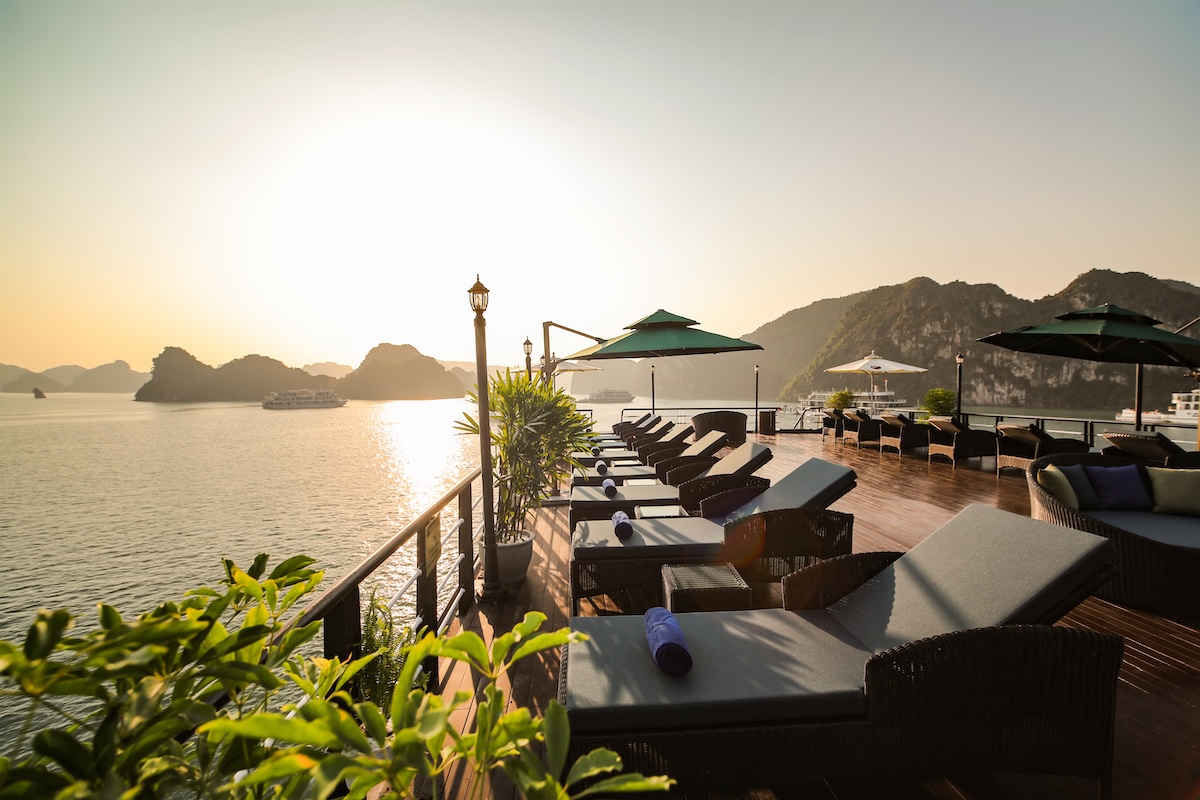
Golden hour on the bay (Photo: Rosy Cruise)
What draws many visitors here is not only the scale of the scenery but also the unhurried atmosphere that settles in almost naturally. Morning mist, still water, and soft light create a quietness that feels rare, even compared to Japan’s peaceful rural regions. It’s the kind of environment that lets you step away from the dense rhythm of cities like Tokyo or Osaka and gives your mind a chance to breathe.
Beyond its natural beauty, Halong Bay is also tied to historical stories and local legends, adding a cultural layer to the experience. It’s not just a place to look at—it’s a place that invites reflection, something many travellers appreciate in their journeys.
1. Getting from Japan to Halong Bay
The easiest way to reach Halong Bay from Japan is to fly to Hanoi first. You can depart from cities like Tokyo, Osaka, or Nagoya. Some flights are direct on certain days, while others require a short layover. The total flight time is usually around 6 hours, depending on the route.
After landing at Noi Bai International Airport, you can continue to Halong Bay by road. A private car or limousine takes about 2.5 hours via the expressway, while shuttle buses from central Hanoi take around 3 hours and are more budget-friendly. If your flight arrives late at night, staying in Hanoi for one night is usually easier. If you land during the day, going straight to Halong works well and still gives you time to rest before your cruise.

Cruise limousine car is convenient for traveling from Hanoi to Halong Bay (Photo: Mon Cheri Cruise)
2. Visa & Entry Requirements
If you hold a Japanese passport, you can enter Vietnam without a visa for up to 45 days. You only need to show your passport at immigration when you arrive. The process at Noi Bai Airport is usually quick, even on busy days.
Before your trip, make sure your passport is valid for at least 6 months from your arrival date. This is a requirement for all international visitors.
If you plan to stay longer than 45 days, or if you want to leave Vietnam and return again during the same holiday, you can apply for a Vietnam eVisa online. The eVisa is valid for 90 days and allows single or multiple entry depending on what you choose.
It’s a good idea to check for any updates before your trip, as entry rules can change from time to time.
3. Best Time to Visit Halong Bay
From October to April, the weather in northern Vietnam is cooler and more comfortable, which makes it a good time for outdoor activities on the bay. The air is less humid than in summer, and the visibility is often better, so the limestone cliffs and the water look clearer. This period is also the most popular, especially around Christmas, New Year, and early spring.
From May to September, the weather becomes warmer and more humid. This is the rainy season, so short storms can happen, especially in July and August. On the other hand, the bay is less crowded during these months, and some cruises may offer lower prices. If you don’t mind the heat and want a quieter trip, this season can still work well — just keep an eye on the weather forecast.
Overall, the experience is enjoyable in both seasons, but the cooler months give you a more comfortable and stable climate, especially if you prefer gentle walks, kayaking, or spending time on the deck.
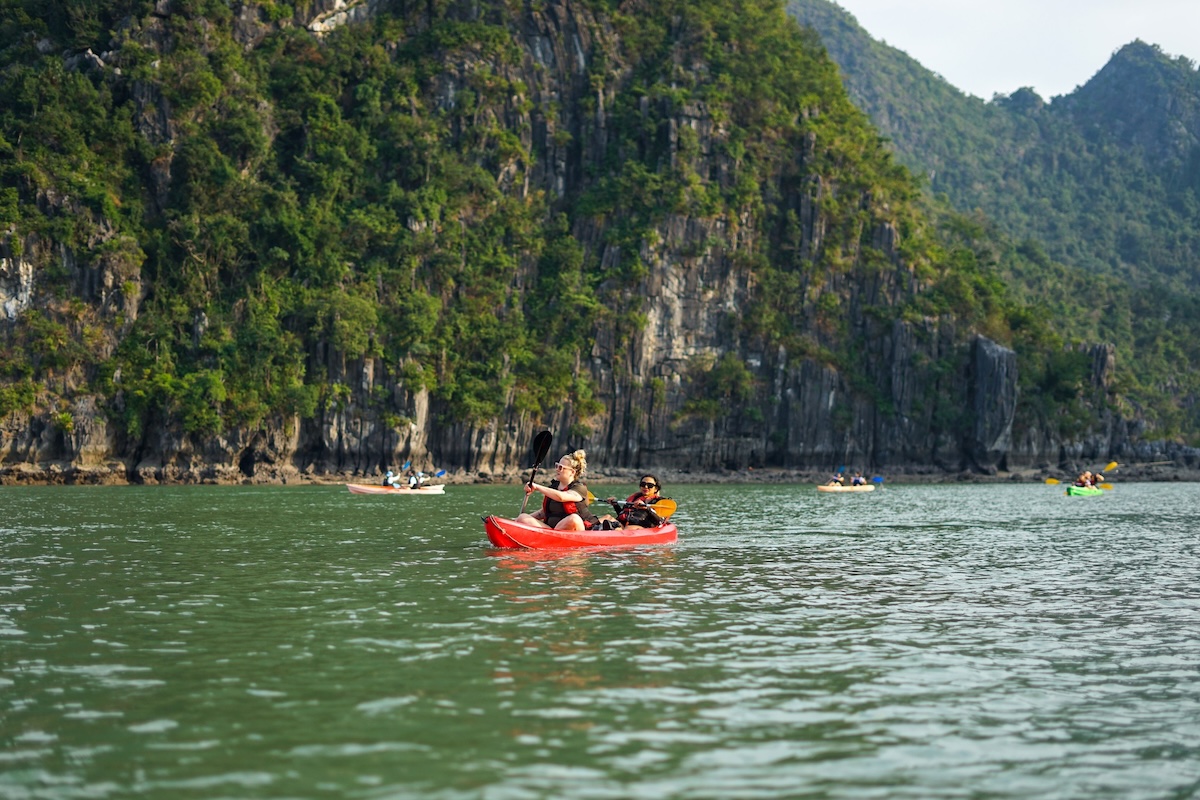
Peace in every ripple (Photo: Peony Cruises)
4. Choosing the Right Cruise
If you only have a short holiday, the 2D1N cruise is the easiest to fit into your schedule. It covers the main activities such as visiting a cave, kayaking, and enjoying the scenery from the deck. Everything is arranged in a simple, predictable way, so you don’t have to rush or worry about planning.
If you prefer a slower pace, the 3D2N cruise gives you more time on the water. You can visit quieter areas like Bai Tu Long or Lan Ha, spend longer kayaking, or join extra activities such as cycling or visiting a floating village. This option suits you if you want a more relaxed trip without feeling pressed for time.
Some cruises offer a luxury option, with larger cabins, private balconies, and more comfortable facilities. These are a good fit if you value privacy and want a quieter environment on board.
If budget is a priority, mid-range or standard cruises still give you the essential Halong Bay experience: clean cabins, good meals, and a clear itinerary. These cruises are straightforward and reliable, and many people find them more than enough for a short trip.
5. What to Expect Onboard
When you board a cruise in Halong Bay, everything is arranged in a clear and simple way, so you can settle in quickly. Most cabins have a private bathroom, air-conditioning, and a large window so you can see the bay from your room. Some boats also have small balconies, but even without one, you can always relax on the sundeck, which is usually the most popular spot.
Meals on the cruise focus on seafood and familiar Asian dishes. Depending on the cruise, meals may come as a set menu or a small buffet. If you have food restrictions, the staff can adjust it as long as you let them know in advance.
Daily activities are easy to join and don’t require any special skill. Kayaking, visiting caves, swimming (when the weather is safe), and a cooking demonstration are the usual options. In the early morning, some boats offer simple tai chi sessions on the deck. You can join everything or skip anything if you prefer to rest.
In the evening, the atmosphere is quiet. Some guests try squid fishing, while others stay on the deck for fresh air. Wi-Fi on most boats is basic, so it’s better to download anything important before the cruise. Overall, the experience is calm and straightforward — a simple way to enjoy the bay without complications.
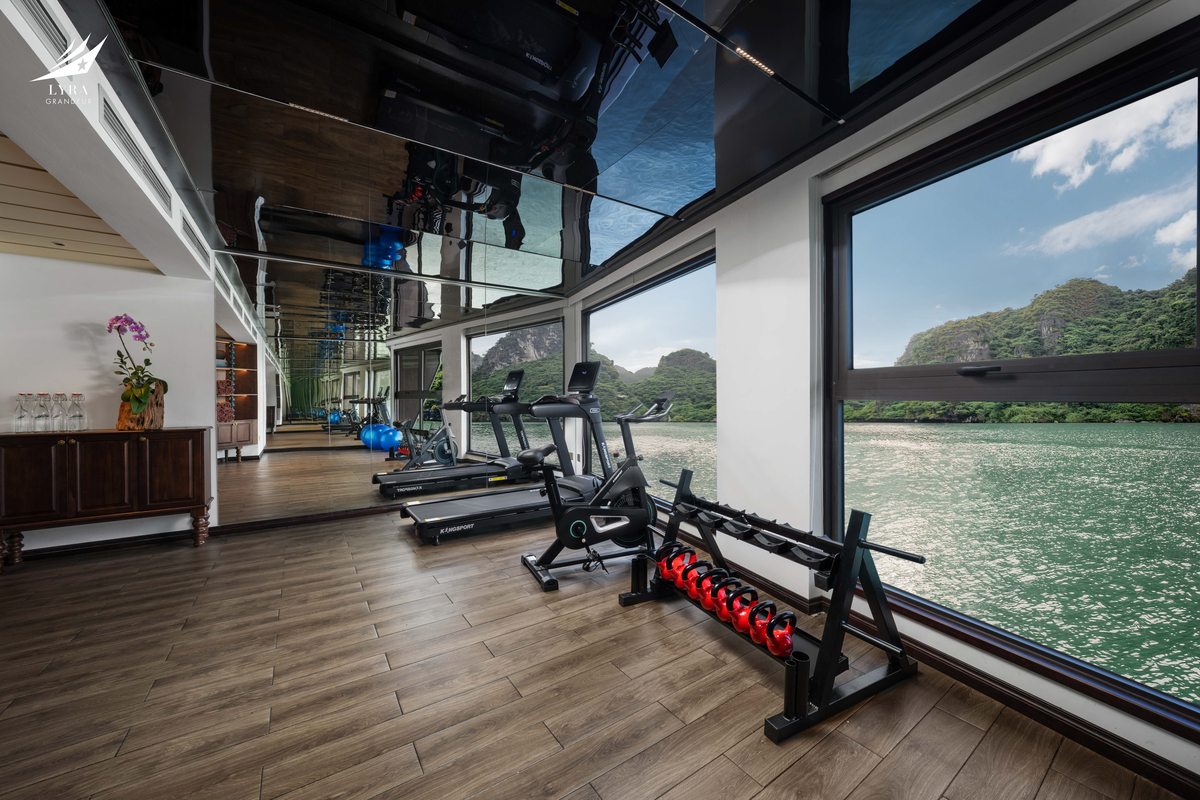
The breathtaking view from the state-of-the-art fitness room onboard (Photo: Lyra Cruise)
6. Practical Tips
- It’s a good idea to carry some Vietnamese dong for small payments. Most cruises accept cards for larger bills, but things like drinks, snacks, or tipping the crew are easier with cash. Exchanging a small amount at the airport or in Hanoi is usually enough for a short trip.
- Vietnam uses Type A, C, and D power outlets. Many boats have universal sockets, but not all of them do, so bringing a simple travel adapter helps avoid any inconvenience.
- If you sometimes get motion sickness, packing light medication is useful. The bay is usually calm, but there can be slight movement when the boat travels between islands. Life jackets are provided for kayaking and other water activities, and safety instructions are clearly explained at the start of the cruise.
- Weather can change quickly, especially from May to September. Because storms can occasionally affect cruise schedules, having travel insurance is helpful in case of unexpected delays or changes. It doesn’t happen often, but it’s better to be prepared.
- Tipping is not mandatory in Vietnam, but many guests leave a small amount at the end of the trip. Around USD 5–10 per person per night is common. If you’re traveling as a group, leaving USD 20–30 for the crew is perfectly fine — it’s simply a way to show appreciation for their work.
7. Suggested Itinerary
- Day 1: Hanoi Arrival
If you fly from Japan to Hanoi, you’ll most likely arrive in the afternoon or evening. After checking into your hotel, a short walk around the Old Quarter and a simple local meal is usually enough for the first night. It helps you settle in without feeling rushed after the long flight.
- Day 2: Hanoi Exploration
The next morning is a good time to explore Hanoi at an easy pace. Walking around Hoan Kiem Lake, visiting St. Joseph’s Cathedral, or stopping by a small café gives you a quick but clear impression of the city. Keeping this day light also makes the trip to Halong Bay the following morning more comfortable.
- Day 3 + 4: Halong Bay
Your Halong Bay cruise usually begins on Day 3. The first day on board includes basic activities like visiting a cave or kayaking, followed by a quiet evening on the deck. The next morning, you’ll have time for another short activity before returning to the harbour. These two days are often the most relaxing part of the trip and give you a good feel for the bay.
- Day 5 + 6: Ninh Binh / Sapa
If you have extra time, you can extend your trip with a visit to Ninh Binh or Sapa. Ninh Binh is about 2 hours from Hanoi and offers gentle scenery like rivers, rice fields, and limestone mountains. Sapa provides a different atmosphere with cooler weather and terraced fields. Either option fits well with the Halong itinerary depending on your preference.
- Day 7: Hanoi Departure
On your final day, return to Hanoi, take a short rest, and head to the airport for your flight back to Japan. The schedule is simple and easy to manage, while still giving you a mix of city life, nature, and a quiet break on the bay.
8. International Cruises from Japan to Halong Bay
Some long-haul East Asia cruise itineraries departing from Japan include Halong Bay as one of the stops along a wider regional journey. These are not frequent weekly routes; instead, major cruise lines release them seasonally as part of extended voyages that travel through Japan, Taiwan, Hong Kong, and Southeast Asia. Ships such as Viking Orion, Celebrity Solstice, and Oceania Riviera operate these multi-country itineraries, often starting from ports like Tokyo or Yokohama before sailing south toward Hong Kong.
From Japan, the ship usually takes several days at sea with intermediate stops — Taiwan or Hong Kong being the most common — before continuing down to Halong. When these ships arrive in Halong, the stay is typically a daytime call of around 6–10 hours, long enough for guests to join bay excursions or a short visit to Hanoi. A few extended itineraries may include an overnight stay, but this is the exception; most ships depart the same evening as they continue onward to central Vietnam or Thailand.
9. Is a Halong Cruise Worth It?
If you have the chance to visit northern Vietnam, you should set foot in Halong Bay at least once to see how surreal the landscape can be. Standing in the middle of quiet water and towering limestone cliffs, you realise how powerful nature is — and how small people feel in front of it.
A short cruise is enough to feel that contrast. You don’t need a long itinerary; just one night on the bay already gives you a moment of calm and a view you don’t easily forget. It’s a simple experience, but it has a way of staying with you long after the trip ends.
People and nature are not separate. They shape each other and form a larger picture of life, the way colours blend in a single painting. Every place in the world carries its own beauty, its own rhythm, and its own meaning.
In Vietnam, Halong Bay is one of those places where this connection becomes easy to feel. When you stand there and look out at the bay, you’re reminded of how powerful nature is — and how peaceful it feels to be a small part of it.