Travel Guide to Getting Around Halong Bay – From Land to Water
If Vietnam were a giant landscape painting, Halong Bay would surely be its brightest highlight. Recognized by UNESCO as a World Natural Heritage site, the bay amazes visitors with thousands of limestone islands rising from emerald waters, dotted with bustling cruise ports.
Exploring Halong is always a blend of land and sea. You might begin with a limousine ride, a tourist shuttle, or simply hop into a taxi, take a leisurely electric car along the beach, or rent a motorbike for the freedom to wander. Out on the bay, the journey transforms: peaceful overnight cruises, traditional wooden day boats, speedboats cutting through the waves, kayaks slipping into hidden caves, or sampans rowed by locals. Together, these experiences weave a journey that feels complete and unforgettable.
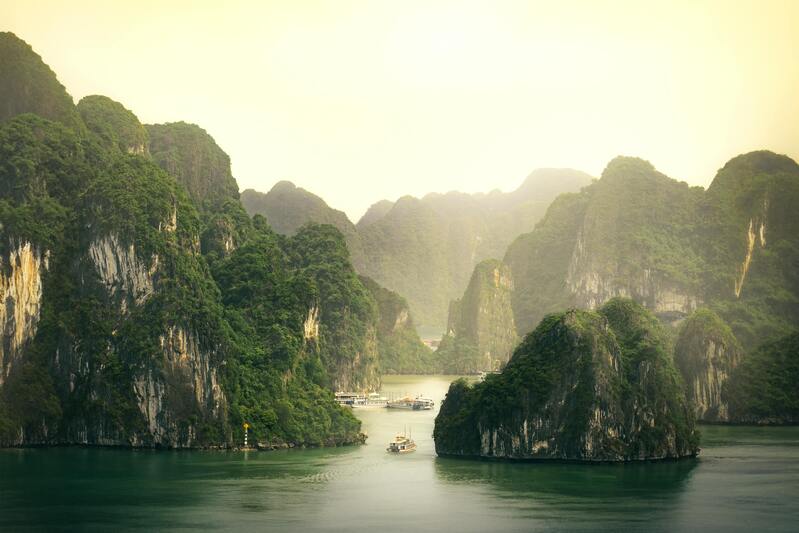
Halong Bay – As Beautiful As a Painting – Source: Pexels
1. Getting to Halong from Hanoi
The distance from Hanoi to Halong is about 160 km, with several ways to travel. The most comfortable and common option is a limousine van, taking around 2.5 hours with ticket prices from 250,000–350,000 VND ($10–15). For a budget-friendly choice, shuttle buses depart daily from Hanoi Old Quarter. The trip takes about 4 hours and costs 150,000–200,000 VND ($6–8). Families or groups may prefer renting a private car for more flexibility. Another alternative is flying to Van Don Airport, located 50 km from Halong. Direct domestic flights are available from Ho Chi Minh City and Da Nang, followed by a short taxi or bus ride into town.
2. Getting around Halong City
Moving around Halong is fairly easy. You can hail Mai Linh or Sun Taxi, or simply book a Grab ride within minutes. Along Bai Chay Beach, electric cars slowly cruise the seaside road, costing only 10,000–20,000 VND ($0.5–1) per ride. Sitting on one of these cars while feeling the sea breeze is a simple yet delightful experience. For more freedom, renting a motorbike for about 150,000 VND/day ($6) is a good option, though you should be confident in navigating busy city traffic.

Mai Linh Taxi – A Convenient Way to Get Around – Source: Mai Linh Taxi
3. Main Cruise Ports in Halong
There are three main cruise ports: Bai Chay, Tuan Chau, and Hon Gai.
- Bai Chay Port is close to the tourist hub, ideal for visitors staying near hotels, restaurants, and night markets.
- Tuan Chau Port is the largest and most modern, home to many luxury overnight cruises. It provides direct access to popular sightseeing routes around the bay.
- Hon Gai Port is located in downtown Halong and often caters to local travelers or itineraries that combine Halong Bay with Bai Tu Long Bay.
Traveling between these ports is simple. Local taxis or shuttle buses cover the distance in 15–20 minutes, with fares ranging from 100,000–150,000 VND ($4–6). Important tip: always double-check your cruise ticket to confirm the exact departure port, as mixing them up is quite common.
4. On the Water – How you move around the Bay
To truly discover Halong Bay, overnight cruises are the top choice. For shorter trips, day boats or wooden junks are widely available. When the cruise anchors at attractions like Sung Sot Cave or Cua Van Fishing Village, passengers transfer to shore by tender or speedboat. Activities like kayaking or riding a sampan rowed by locals let you explore hidden lagoons and narrow caves up close – unforgettable highlights of the trip.
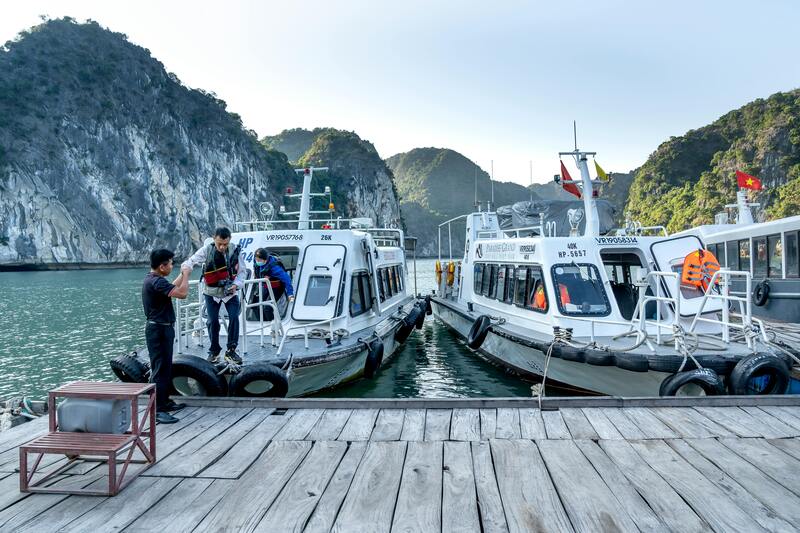
Island Hopping in Halong Bay by Boat – Source: Pexels
5. Public Transport in Halong
Green-and-yellow city buses operate daily and are a familiar sight for locals. However, routes are not tourist-friendly and rarely stop at major attractions. Instead, travelers often rely on intercity buses connecting Halong with other destinations: just over an hour to Hai Phong, a few hours south to Ninh Binh with its stunning Trang An landscape, or back to Hanoi, the bustling capital.
6. Practical Tips
✅ Always confirm your cruise port before departure.
✅ Grab is convenient but expect higher fares during peak hours.
✅ Most taxi drivers prefer cash, though e-wallets and GrabPay are accepted.
✅ For families, electric cars and taxis are the easiest options.
✅ For solo travelers or adventurers, renting a motorbike offers flexibility.
In reality, traveling around Halong Bay is simple once you know your options. Most cruise operators even include transfers or can help arrange transportation, so don’t hesitate to ask in advance. With the right choice of transport, your journey through this World Heritage wonder will be smooth, enjoyable, and truly unforgettable.