Halong Bay Travel Guide for Visitors from the UK
Halong Bay has long attracted travellers who appreciate wide, open landscapes and a slower, more reflective pace of exploration. Its limestone peaks, calm waterways, and gentle atmosphere create a setting that feels distinct from the busier cities that often frame a trip through Asia. For visitors from the United Kingdom, the journey to Halong typically begins with a long-haul flight into northern Vietnam, followed by a straightforward overland transfer to the coast—an easy shift that quickly replaces urban energy with the quiet rhythm of the bay.
As Vietnam becomes an increasingly popular destination for UK travellers, so does the interest in understanding the most practical ways to reach Halong, the ideal times to visit, and how to choose a cruise that aligns with different travel styles—whether that means a compact overnight itinerary or a more relaxed, immersive experience. This guide brings together those essentials, offering clear, reliable information to help you prepare for a smooth and rewarding visit to one of Vietnam’s most iconic landscapes.
1. Getting from UK to Halong Bay
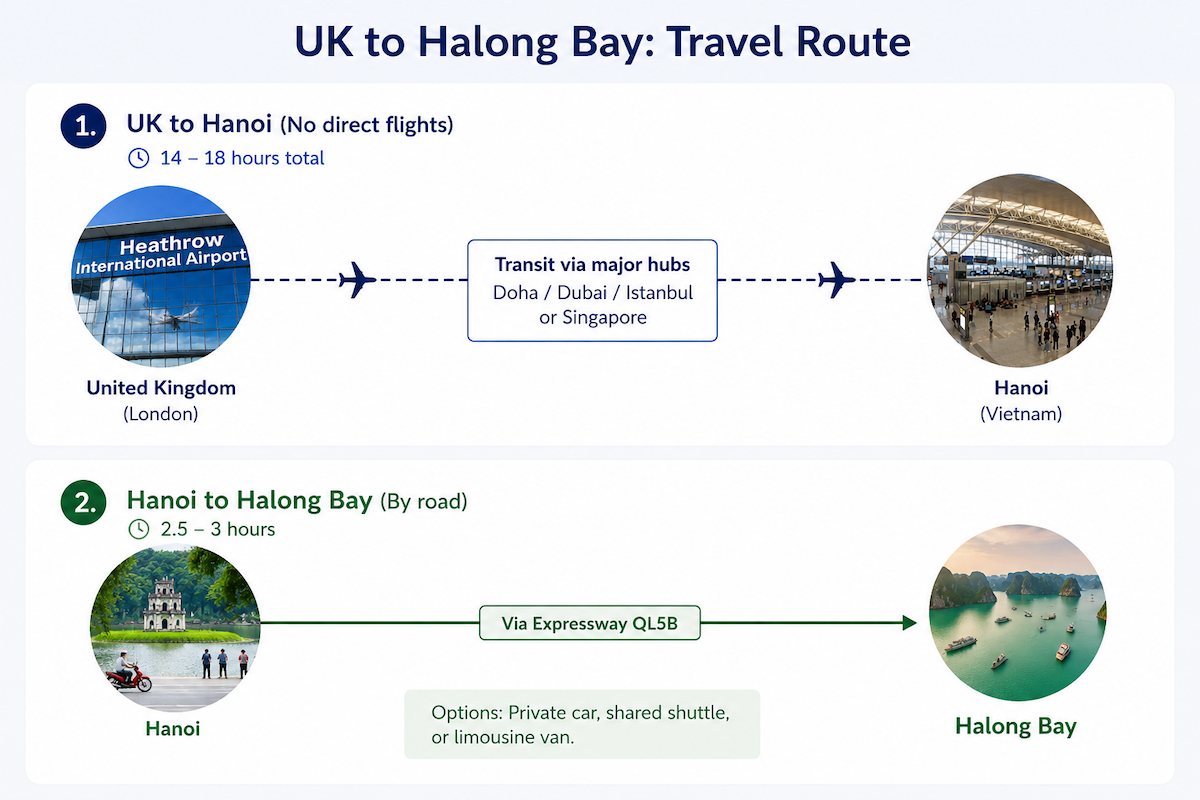
Most travellers from the United Kingdom begin their journey to Halong Bay by flying into Hanoi. There are no direct flights from the UK to northern Vietnam, so most routes connect through major transit hubs such as Doha, Dubai, Istanbul or Singapore. Depending on the connection, the total travel time typically ranges from 14 to 18 hours. Flights from London often arrive in Hanoi early in the morning or late in the evening, which helps travellers manage jet lag and plan their onward journey to Halong.
From Hanoi, the most common way to reach the bay is by road. The drive usually takes 2.5 to 3 hours via the expressway, and travellers can choose between private cars, shared shuttles or higher-comfort limousine vans depending on their preference.
For first-time visitors to Vietnam, it is helpful to allow some flexibility when planning the transfer from Hanoi to Halong. Evening arrivals often require an overnight stay in Hanoi before continuing to the coast the next morning, while daytime arrivals usually allow a same-day connection. Once in Halong, travellers can head directly to the passenger terminal, where most cruises depart in the early afternoon, making the transition from city to bay smooth and straightforward.
2. Visa & Entry Requirements
Here are things you need to know while planning your Halong Bay trip from UK:
- UK citizens can enter Vietnam visa-free for up to 45 days for tourism or business. When you arrive, immigration will stamp your passport with the date you must leave — check this carefully before walking away, as it cannot be changed later.
- Your passport needs to have at least 6 months’ validity from your arrival date, 2 blank pages, and no damage. Vietnam has denied entry to travellers with worn or damaged passports. You must also enter and exit using the same passport.
- If you plan to stay longer than 45 days, you can apply for a pre-approval letter through a travel agent, obtain a visa from the Vietnamese Embassy in the UK, or apply for a 90-day E-visa. E-visas limit you to the entry and exit points you selected during the application, and you must leave and re-enter Vietnam to activate an E-visa issued while you are already in the country.
- Those working or studying must obtain the correct visa or work permit before travelling. Overstays or working without proper documents can lead to fines, delays when exiting Vietnam or future entry restrictions.
- Travellers transiting between international and domestic flights in Hanoi or Ho Chi Minh City must clear immigration and officially enter Vietnam, even if their onward destination is elsewhere.
- Vietnam also requires travellers to declare prescription medication and cash amounts over 15 million VND or USD 5,000.
3. Best Time to Visit Halong Bay
Halong Bay can be visited year-round, but different seasons offer different experiences. Many travelers find the period from October to April the most comfortable, as temperatures are cooler and the skies are generally clearer. This is also the time when the bay takes on a softer, more atmospheric look, with light mist in the mornings and steady conditions for cruising.
The summer months from May to September bring warmer weather and brighter skies, which can be ideal for swimming and kayaking. However, this period also comes with higher humidity and occasional tropical storms, especially from July to August. Cruise operators continue to run as usual, but itineraries may be adjusted if the weather requires it.
For visitors who prefer quiet travel periods, the shoulder months of March, April, October and November tend to strike the best balance. The weather is pleasant, visibility is good and the bay is noticeably less crowded than during peak winter holidays. No matter the season, Halong’s scenery remains compelling, but choosing the right time can help shape the kind of experience you want on the water.
4. Choosing the Right Cruise
Selecting a cruise in Halong Bay is less about finding a single “best” option and more about choosing the itinerary that matches how you want to experience the bay. Most travellers from the UK follow one of the two common formats: a 2D1N cruise or a 3D2N cruise. Each offers a different rhythm and level of immersion.
The 2D1N cruise is the most practical choice for visitors on tighter itineraries. It covers the signature stops, includes time for kayaking or a cave visit and gives a clear impression of the bay’s landscape. Although the schedule is compact, it still allows for a full afternoon and morning on the water, which is often enough for first-time visitors.
The 3D2N cruise suits travellers who prefer to move at an easier pace and see more of the quieter parts of the bay. With an additional day, the cruise can travel farther from the busy central routes, giving you more time for swimming, kayaking or visiting smaller coves and fishing communities. It feels more like a journey than a quick introduction.
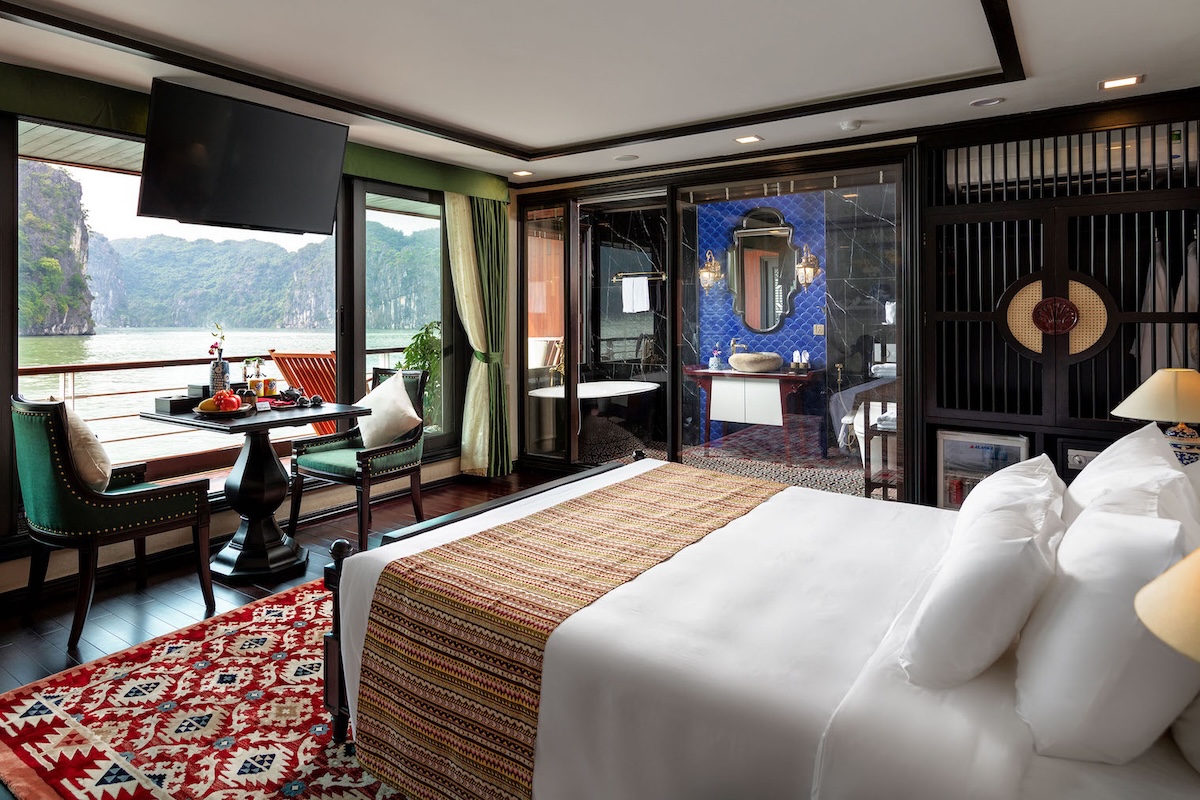
Refined dining and a variety of facilities on luxury cruises will enhance the overall cruising experience.
Source: Orchid Premium Cruise
Comfort level is another factor. Luxury cruises appeal to travellers who value spacious cabins, refined dining and more onboard facilities, while mid-range options offer solid comfort at a more accessible price point. Budget-friendly cruises are also available, though they focus on essentials rather than amenities.
In the end, the right choice depends on what you expect from your time in Halong: a concise overview, a deeper exploration or a cruise that prioritises comfort. Being clear about the experience you want will help you choose an itinerary that fits naturally into your trip.
5. What to Expect Onboard
Most cruises on Halong Bay offer a level of comfort that feels familiar to international travellers, with en-suite cabins, air conditioning and large windows or balconies on many boats. The atmosphere on board is generally relaxed, with a mix of quiet time to enjoy the scenery and planned activities for those who want to be more involved.
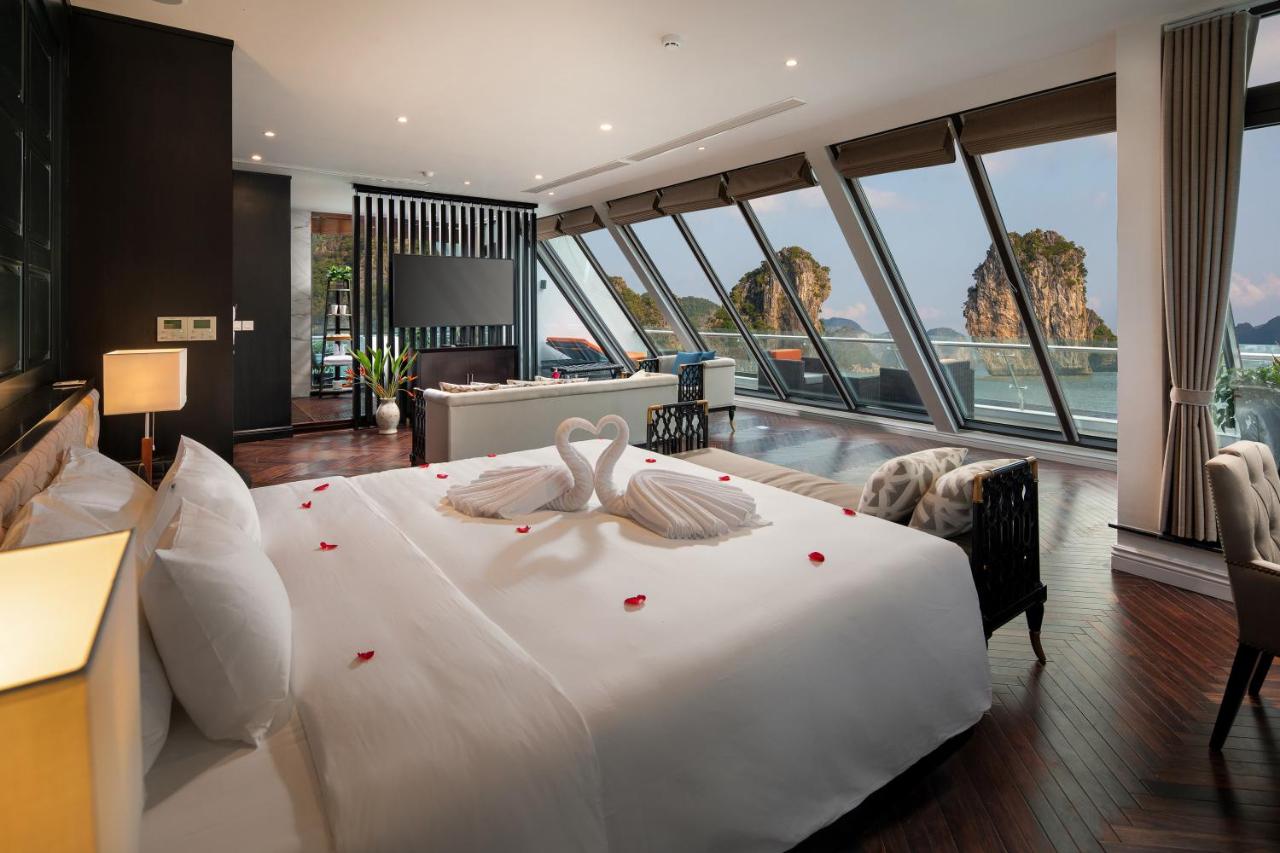
A quiet cabin with a front-row view of Halong Bay
Source: Stellar of the Seas Cruise
Meals often combine Vietnamese seafood with a selection of Western-friendly dishes, and the dining experience is usually casual rather than formal. Throughout the day, cruises typically include light activities such as kayaking, bamboo boat rides, cave visits or short walks to viewpoints. In the evenings, many boats offer simple onboard entertainment like a cooking demonstration, squid fishing or tai chi the following morning on the sundeck.
Luxury vessels may add facilities such as a bar, spa or larger lounging areas, but even mid-range cruises provide a comfortable base for exploring the bay. Overall, the onboard experience is designed to be straightforward and enjoyable, giving travellers enough structure to stay engaged while still leaving plenty of time to appreciate the landscape.
6. Practical Tips
Paying in Vietnamese dong is generally the easiest option, although some cruise operators and travel agencies may accept pounds or US dollars for deposits or pre-arranged services. It is helpful to carry a small amount of cash for drinks, tips or incidental purchases on board.
Vietnam uses Type A, C and D plug sockets, so bringing a universal travel adapter is essential. Power supply is 220V, which works fine with most modern chargers, but older devices may need a converter.
Health and safety standards on reputable cruises are consistent, but travellers who are prone to seasickness may want to carry motion-sickness tablets, especially during the warmer months when the water can be slightly choppier. Travel insurance that covers medical care, cancellations and cruise adjustments is strongly recommended.
Tipping is not compulsory in Vietnam, but a modest gratuity is appreciated on board. Many guests offer around USD 5–10 per day, depending on the level of service. Keeping these small details in mind can help make your time in Halong smoother and more comfortable.
7. Suggested Itinerary
Most UK travellers spend at least one night in Hanoi before heading to Halong Bay, and this stopover becomes a convenient chance to ease into the local pace. If you arrive a day early, the Old Quarter is usually the easiest place to explore on foot, with its narrow streets, small cafés and straightforward access to key sights. Hoan Kiem Lake is a good starting point after a long flight because it’s central, open and requires no fixed plan. The Temple of Literature and the Vietnam Museum of Ethnology are also popular choices for travellers looking for something cultural without committing to a full-day tour.
On the morning of your cruise, most visitors leave Hanoi between 9 and 10 am. This timing avoids early rush hour and still gets you to Halong in time for early afternoon boarding. Once on the bay, the first day typically includes lunch on board, sightseeing as the boat moves deeper into the limestone formations and a light activity such as kayaking or visiting a cave.
Travellers on a 2 nights cruise can expect the following day to be quieter and more spacious, with itineraries often moving into less crowded areas for swimming, boat rides or visits to fishing communities. Cruises return to the harbour late the next morning, leaving enough time to travel back to Hanoi. Many travellers use this return day for something simple and flexible, such as visiting the West Lake area, strolling around the Old Quarter or enjoying a relaxed dinner before their onward journey.
8. International Cruises from UK to Halong Bay – What Travelers Should Know
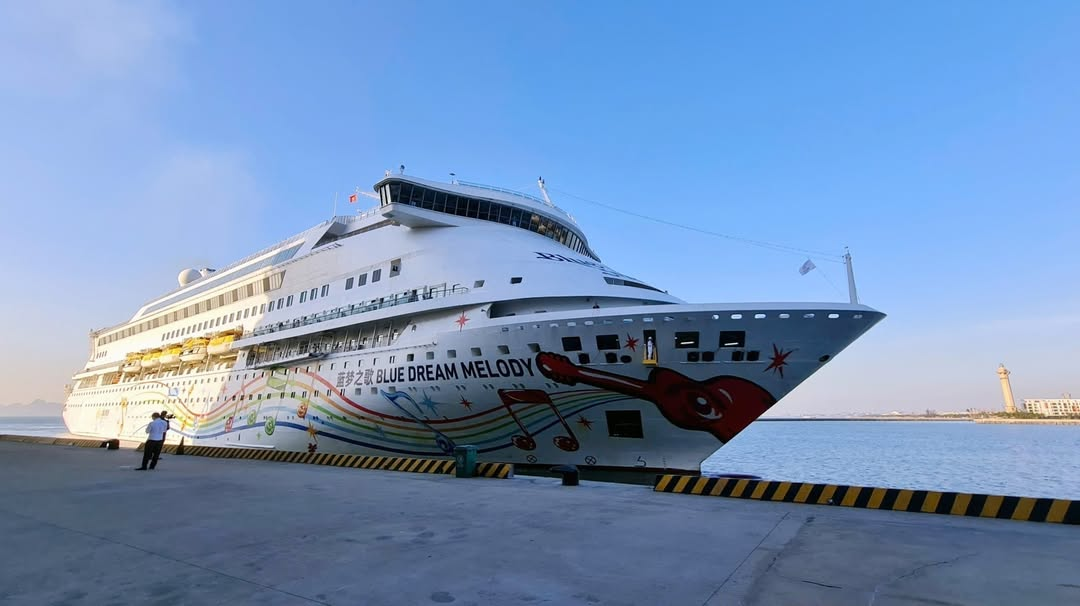
Blue Dream Melody docked calmly at Halong International Cruise Port
Source: @vietnamnewsvns
There are no direct cruise routes sailing from the United Kingdom to Halong Bay, so travellers who hope to reach the bay by sea usually encounter it as part of a longer itinerary through Asia. These voyages typically begin from major regional hubs such as Singapore, Hong Kong, Keelung or Tokyo, where cruise lines sometimes include Vietnam as one of the ports of call. Some international brands, including Royal Caribbean, Celebrity Cruises, Princess Cruises and Holland America, have previously operated routes that stopped in Vietnam, though the specific ports and frequency vary each season. Because these schedules change from year to year, it is essential to check the current itinerary rather than relying on past examples.
When a ship does visit Halong Bay, it usually docks for a single full day at Halong International Cruise Port. This gives passengers enough time to join a short excursion on the bay, visit a cave or take part in a guided cultural activity before the ship continues its journey. Overnight stays do occur on some extended voyages, but they are relatively uncommon.
For travellers from the UK, the key is to view Halong Bay as a brief stop within a much wider journey rather than a standalone cruise destination. Those who want a deeper experience — such as kayaking, swimming or spending the night on a smaller vessel — will find it far more flexible to fly into Vietnam and join a dedicated Halong or Lan Ha Bay cruise. International port calls offer a convenient introduction, but they provide only a snapshot of the landscape.
9. Is a Halong Cruise Worth It?
For those visiting northern Vietnam, spending a night on the bay is one of the experiences people tend to value most simply because it offers a clearer, more complete view of the landscape than you can get from the shore. Being on the water allows you to see how the limestone formations unfold, how the light changes across the bay and how quiet the surroundings become once you move away from the harbour. An overnight cruise gives you more time to settle into this rhythm, with calm mornings, gentle activities and enough space to take in the scenery at your own pace.
Even shorter itineraries provide a good introduction, especially for visitors trying to balance limited time in Vietnam with multiple destinations. The experience is not dramatic or fast-paced, but it is steady and thoughtful, and that is part of its appeal. If you value nature, open space and a slower moment within a longer trip, a Halong cruise tends to feel worthwhile without needing to do anything extraordinary.