Halong Bay from Hong Kong: Your Complete Travel Guide
- 1. Getting from Hong Kong to Halong Bay
- 2. Best Time to Visit Halong Bay from Hong Kong
- 3. Choosing the Right Cruise – Popular Options for Visitors from Hong Kong
- 4. What to Expect Onboard
- 5. Practical Tips for Your Halong Trip
- 6. Suggested Itinerary for Your Halong Trip from Hong Kong
- 7. International Cruises from Hong Kong to Halong Bay
- 8. Is a Halong Cruise Worth It?
For many people from Hong Kong, a trip to Halong Bay feels like a peaceful pause from the city’s fast rhythm. In less than two hours by plane, you can leave behind the skyscrapers and find yourself by the calm blue sea, surrounded by thousands of limestone islands rising from the water.
Halong Bay is close enough for a short break from Hong Kong, but the scenery feels completely different, so even a couple of days there is enough for you to feel a real change of atmosphere.
In recent years, more travellers from Hong Kong have turned to Northern Vietnam as an alternative to Phuket or Cebu — not just because it’s affordable, but because they find in Halong a balance between relaxation, culture, and nature.
In Halong Bay, you’ll find a range of cruise options — from traditional wooden boats to modern ships with private balconies. Many visitors also combine their Halong trip with visits to Hanoi’s Old Quarter, Ninh Binh’s scenic limestone valleys, or the mountain town of Sapa — all just a few hours away by road.
1. Getting from Hong Kong to Halong Bay
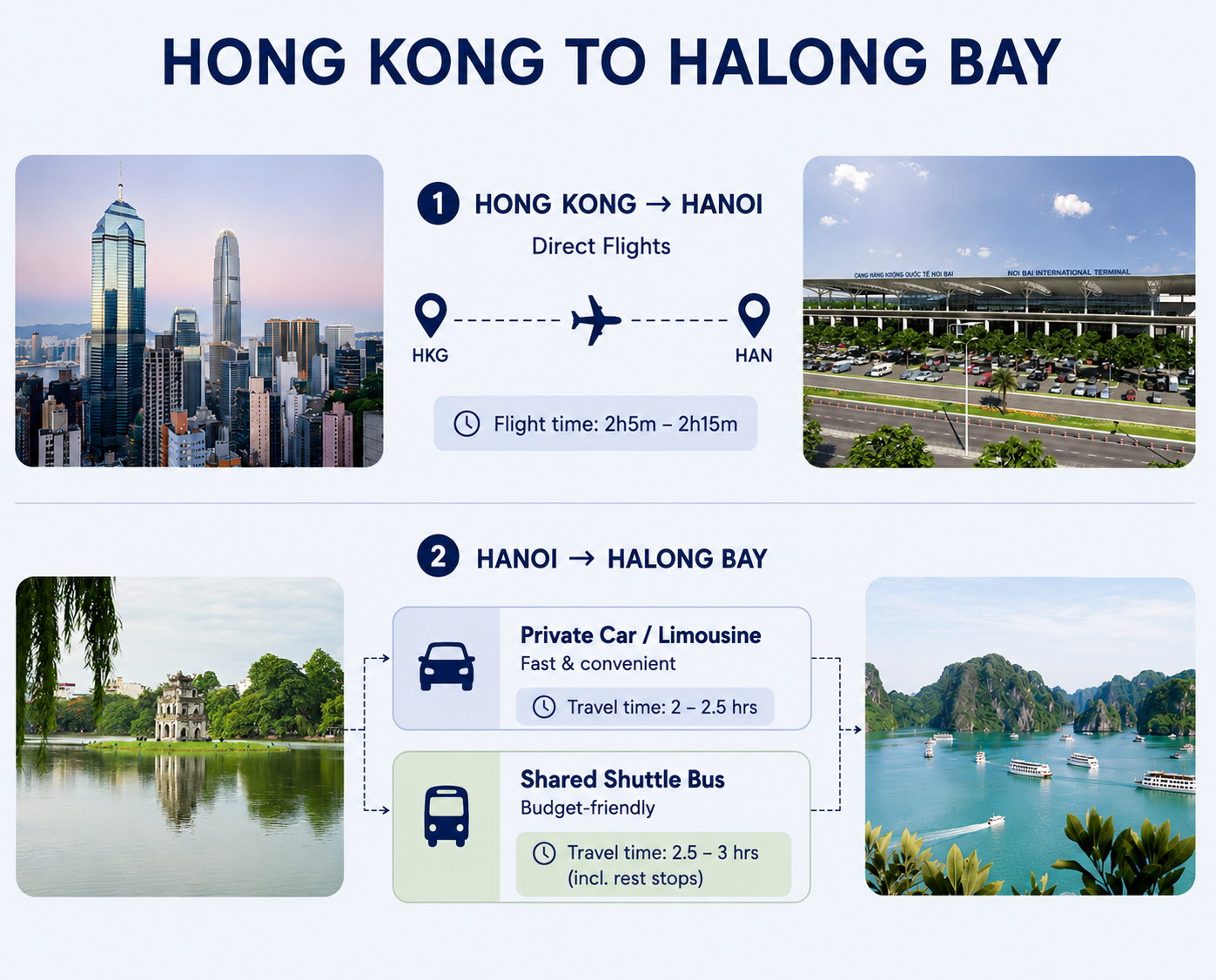
Flights from Hong Kong to Vietnam:
- Main route: Direct flights from Hong Kong International Airport (HKG) to Hanoi – Noi Bai International Airport (HAN), served by Cathay Pacific, Vietnam Airlines, HK Express, and Bamboo Airways.
- Actual flight time: about 2 hours 5 minutes – 2 hours 15 minutes.
From Hanoi or Haiphong to Halong Bay:
- Private car or limousine: most convenient, 2 - 2.5 hours via the modern Hanoi–Haiphong–Halong Expressway (QL 5B).
- Shared shuttle bus: budget-friendly, 2.5 - 3 hours including short rest stops.
2. Best Time to Visit Halong Bay from Hong Kong
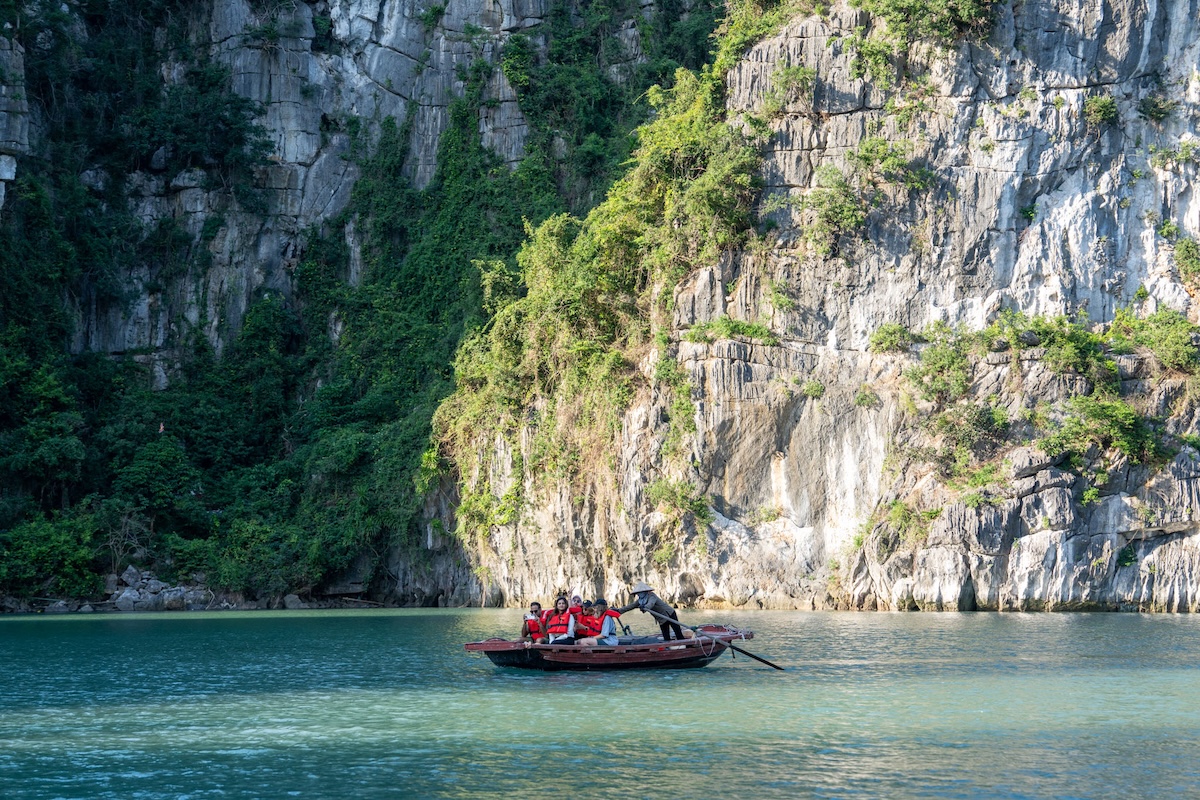
Dry & cool weather from October to April is ideal for cruising Halong Bay.
Photo: Cycad Cruise
The most comfortable period to visit Halong Bay is from October to April, when the weather is cooler and there’s less rain. Outdoor activities like kayaking, sitting on the deck, or watching the sunrise feel easier in this season. This timeframe also lines up well with many year-end holidays for travellers coming from Hong Kong.
From May to September, the weather turns hotter and more humid, usually around 28–33°C, and there can be short bursts of rain or the occasional tropical storm. The upside is that the bay is quieter, and cruise prices are often lower. If you don’t mind warmer weather and prefer fewer crowds, this season can still work well — just check the forecast before your trip.
The busiest weeks fall around Christmas, New Year, and Lunar New Year. If you plan to travel during these holidays, booking your cruise two to three weeks in advance will help you avoid last-minute issues.
3. Choosing the Right Cruise – Popular Options for Visitors from Hong Kong
If you want to see different parts of the bay without planning too much, going on a cruise is the easiest option. The first thing you should decide is how long you want to stay, depending on your travel schedule in Vietnam.
If you’re on a short 3–4-day trip, a 2D1N cruise fits perfectly. Most itineraries include Halong’s highlights such as Sung Sot (Surprise) Cave, Titop Island, and kayaking areas in the heart of the bay. You’ll watch the sunset from the sundeck, join a small cooking class, or start your morning with Tai Chi on deck. Well-rated options for short trips include Orchid Trendy, Paradise Elegance, and Genesis Regal, all featuring private balconies and quality dining.
For a slower, more immersive experience, a 3D2N cruise lets you explore further into quieter areas like Lan Ha Bay or Bai Tu Long Bay. You can cycle around Viet Hai Village, go squid fishing at night, or swim in hidden lagoons. Cruises like Heritage Line Ylang, Peony Cruise, and Stellar of the Seas are popular among international travellers for their thoughtful balance of culture and relaxation.
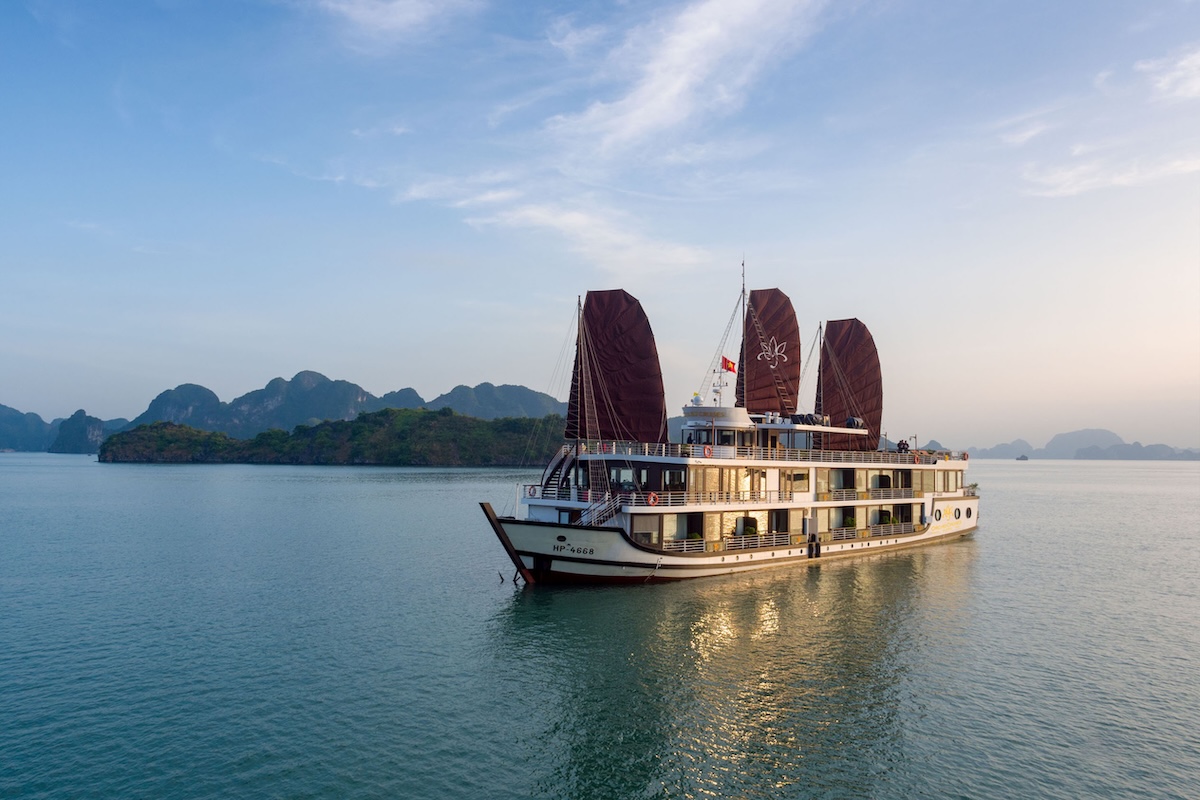
Orchid Trendy is one of the top options for visitors from Hong Kong.
Source: Orchid Trendy Cruise
If you’re after a full resort-at-sea experience, consider a luxury 5-star cruise. Stellar of the Seas has some extra facilities such as a small pool, a bar, and a few onboard activities. It’s a good fit if you prefer a bit more space and comfort on the boat. Prices for top-tier cruises usually range from USD 350–600 per person per night, depending on cabin type and season.
For a more affordable yet comfortable option, mid-range cruises such as La Casta, Rosy Cruise, or Renea Cruise (Bai Tu Long) provide good service, clean cabins, and satisfying food. This is a reliable choice if you want an authentic Halong experience without overspending.
4. What to Expect Onboard
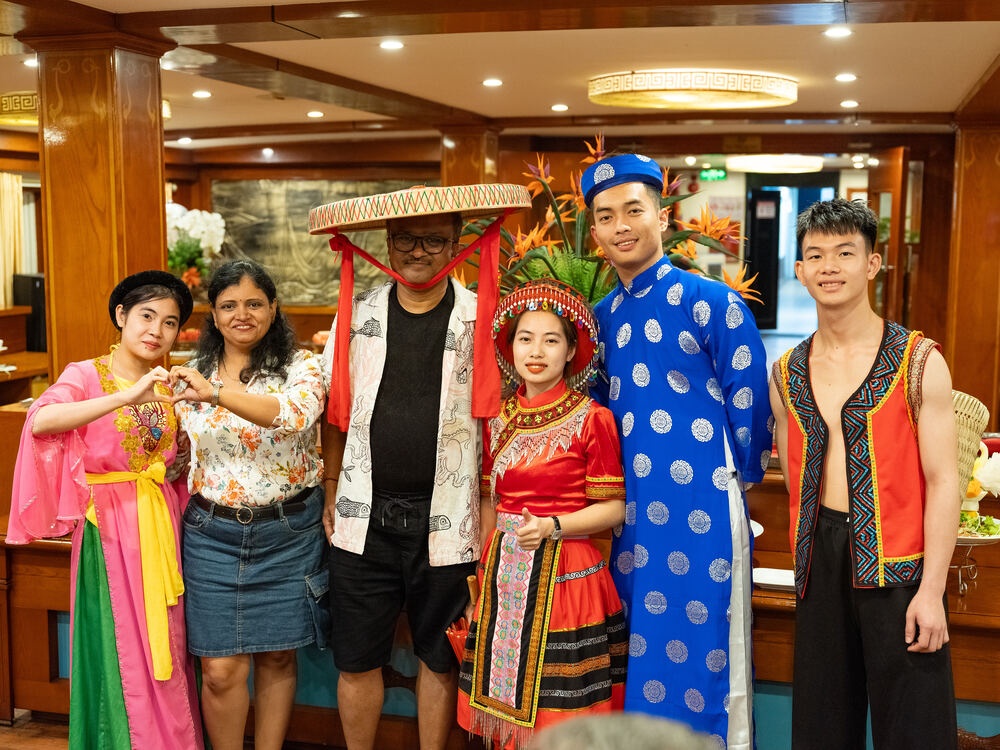
Traditional costume fashion show on Amanda Cruises.
Photo: Amanda Cruises
- On a Halong Bay cruise, everything is arranged so you can enjoy the scenery in the most comfortable way.
- Cabins all come with en-suite bathrooms, air conditioning, and large windows or balconies facing the bay. Some luxury cruises even have bathtubs by the glass window so you can relax while looking out at the limestone cliffs.
- Dining is a mix of fresh Vietnamese seafood and familiar Western-style dishes, suitable for many different tastes.
- Activities usually include kayaking, bamboo boat rides, cave visits, cooking classes, morning Tai Chi, and night squid fishing.
- Entertainment varies depending on the cruise: you can enjoy the bar, relax on the sundeck, or make use of the spa services on higher-end cruises.
5. Practical Tips for Your Halong Trip
- Currency & payments:
In Vietnam, most services on land (restaurants, taxis, small shops) use Vietnamese dong (VND). Some cruises allow you to pay by international card when you check out, but small expenses like drinks, buying seafood from floating villages, or tipping the crew are best paid in cash. Many travellers from Hong Kong assume USD is accepted everywhere, but in reality only some travel agencies and larger hotels take it. It’s better to exchange a small amount of VND at Noi Bai Airport or at reputable exchange counters in Hanoi’s Old Quarter; the rates there are usually better than at the pier.
- Power plugs:
Vietnam uses Type A, C, and D sockets, with Type C (two round pins) being the most common. If you carry cameras, gimbals, hair dryers, or multiple electronics, it’s best to bring a universal adapter. Most 4–5 star cruises have international sockets in the cabins, but mid-range boats might not; sometimes you may need to borrow an adapter from reception.
- Health, weather & safety:
Halong Bay is generally calm, but if you get seasick easily, bring motion-sickness medicine or patches. In summer (June–August), there may be short storms, and the bay authority can temporarily suspend cruise operations for safety. It doesn’t happen often, but it’s good to know, especially if your schedule is tight.
When kayaking, wearing a life jacket is mandatory for everyone, even strong swimmers, it’s an official safety rule, not just a suggestion.
- Wifi & connectivity:
Many travellers are surprised that wifi on cruises is weak or drops out when the boat moves far from shore. If you need a stable connection (remote work or constant communication), the best option is to use a Vietnamese 4G SIM card and switch to hotspot. Viettel is the strongest mobile network in northern Vietnam.
- Travel insurance:
Travel insurance can be useful, especially during summer when the weather can change quickly or unexpected illness on board can incur extra costs. Most international travel insurance plans include a “cruise interruption” option, which is particularly helpful for Halong trips.
- Tipping:
Tipping in Vietnam is not compulsory, but it is genuinely appreciated, the crew works long hours on board. A common amount is around USD 5–10 per person per night. For larger groups (family or friends), many travellers leave around USD 20–30 for the whole team (entirely up to your experience).
A few small but useful notes:
- Bring slippers or sandals in case wooden decks can get slippery when damp.
- If you travel with kids, pack a light jacket for them; evenings on the bay are windier than expected.
- Bring a small waterproof pouch for your phone when kayaking; many travellers have dropped their phones while paddling into dark caves.
- Cruises usually provide towels, life jackets, and complimentary drinking water so there’s no need to pack too much.
6. Suggested Itinerary for Your Halong Trip from Hong Kong
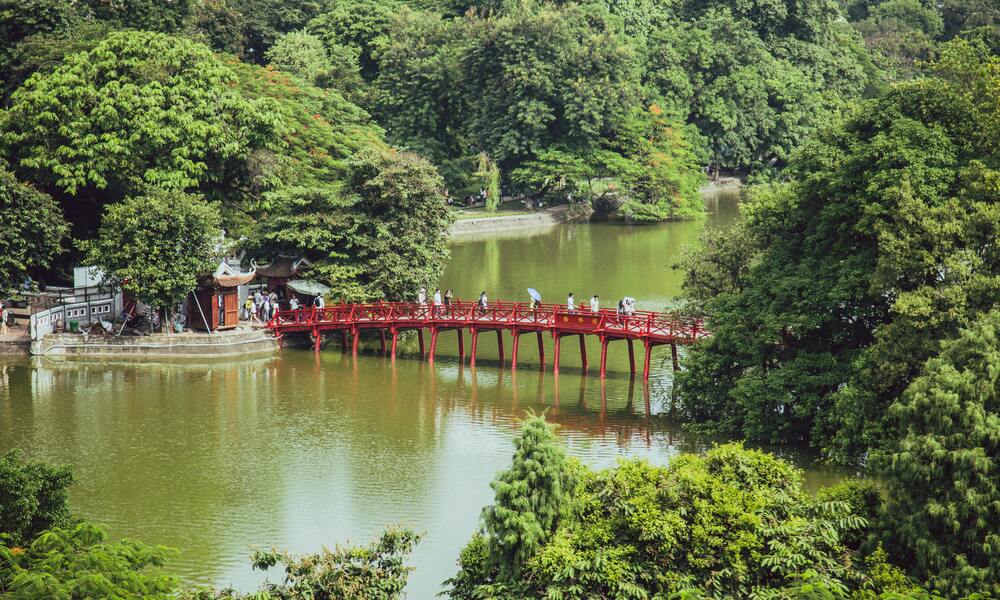
Hanoi is always one of the must-visit places when traveling to Halong Bay.
Photo: minhle17vn via pexels
Your trip usually begins with a flight from Hong Kong to Hanoi, and most arrivals land in the late afternoon or evening. After checking in, you’ll have just enough time for a gentle introduction to the city — a short walk around the Old Quarter, a simple bowl of phở or bún chả, and a chance to ease into the slower rhythm of northern Vietnam before the next day’s plans.
The following day is ideal for exploring Hanoi at a comfortable pace. A walk around Hoan Kiem Lake, a quick visit to St. Joseph’s Cathedral, or a stop at Dong Xuan Market gives you a good sense of the city’s daily life. Many travellers also enjoy slipping into a quiet café tucked inside the alleys, which is a good way to rest after the flight and prepare for the journey to Halong Bay the next morning.
Your overnight cruise on Halong or Lan Ha Bay usually starts on Day 3. The time on the bay is usually when you get to slow down the most and enjoy the scenery— kayaking in calm water, visiting caves, swimming when the weather allows, and ending the day with sunset views from the deck. Waking up to the view of limestone cliffs is a small moment that feels very different from daily city life.
If you have a few extra days, adding Ninh Binh or Sapa makes the trip feel more complete. Ninh Binh is easy to reach from Hanoi, with river valleys and rice fields that feel peaceful and open. Sapa offers something different: cool air, terraced hillsides, and a chance to see mountain culture up close. Either option pairs well with the cruise depending on what kind of scenery you prefer.
On the final day, you’ll make your way back to Hanoi, spend a little time resting or picking up a few souvenirs, and then head to the airport for your flight home to Hong Kong. It’s a simple itinerary, but it manages to combine culture, nature and a change of pace without feeling rushed.
7. International Cruises from Hong Kong to Halong Bay
A few East Asia cruise itineraries leaving Hong Kong include Halong Bay as a port-of-call, mainly on seasonal, long-haul routes rather than fixed weekly schedules. Ships such as ms Westerdam (Holland America Line), Celebrity Solstice (Celebrity Cruises) and Viking Orion (Viking Cruises) occasionally operate extended journeys connecting Hong Kong with Japan, Taiwan and Southeast Asia.
On these itineraries, Halong Bay usually appears early in the voyage, with the sailing from Hong Kong taking roughly one to two days at sea. These cruises treat Halong as part of a wider regional route, not a standalone Hong Kong–Halong service.
When the ship arrives, the stay is typically a day visit of around 6–10 hours, enough time for curated excursions on the bay or a streamlined trip to Hanoi. A small number of longer itineraries may include an overnight stop, but most vessels continue to the next Southeast Asian port the same evening.
8. Is a Halong Cruise Worth It?
If you’re flying in from Hong Kong, the honest answer is yes. With just a few hours of travel, you can reach one of the most beautiful bays in Asia. Compared with similar cruise experiences in Japan, Korea, or Europe, Halong often feels both closer and more unique, while the overall cost is usually more manageable.
A cruise also fits easily into a one-week itinerary: you can spend two days on the bay and still have plenty of time for Hanoi, Ninh Binh, or Sapa without feeling rushed. With the short flight from Hong Kong and the striking scenery, Halong is a destination truly worth your time.
Halong Bay is a worthy stop if you’re taking a short trip from Hong Kong to Vietnam. With a bit of early planning for your cruise and transfers, you’ll have a complete experience — beautiful scenery, a calm atmosphere, and memorable moments on the bay.