Comprehensive Halong Bay Guide for Malaysian Visitors - Transport, Visa & Cruise Tips
- 1. Getting from Malaysia to Halong Bay
- 2. Visa & Entry Requirements for Malaysian Travelers
- 3. Best Time to Visit Halong Bay
- 4. Choosing the Right Cruise – Popular Options
- 5. What to Expect Onboard
- 6. Practical Tips
- 7. Suggested Itinerary
- 8. International Cruises from Malaysia to Halong Bay
- 9. Is a Halong Cruise Worth It?
In northern Vietnam, there is one place you really shouldn’t miss, and that’s Halong Bay. It offers a very different setting compared to the beach destinations in the south or central regions. The bay is quieter, the air feels cooler, and the limestone formations rising close to the water give it a distinct character. With a flight from Kuala Lumpur to Hanoi taking only a few hours, adding Halong Bay to your trip is easy and doesn’t require complicated planning.
1. Getting from Malaysia to Halong Bay
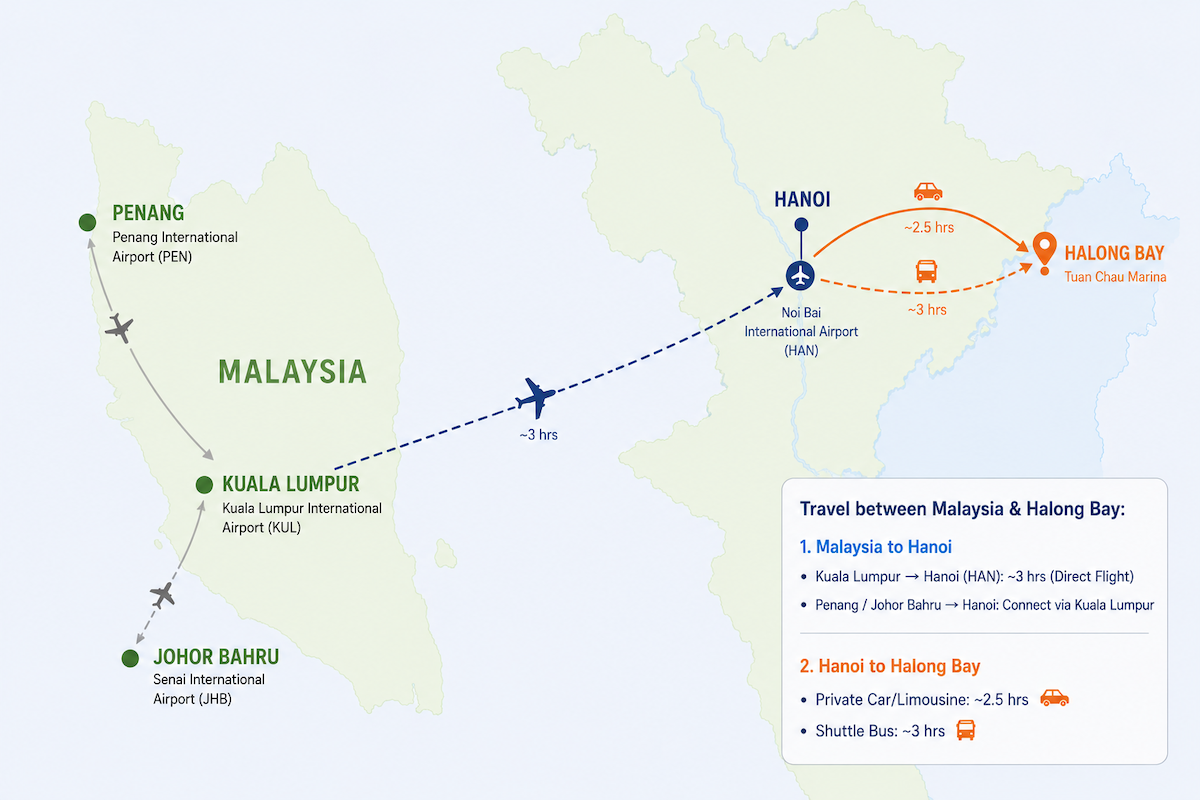
For travelers coming from Malaysia, the easiest way to reach Halong Bay is by flying into Hanoi first. From Kuala Lumpur, airlines such as AirAsia, Malaysia Airlines, Vietnam Airlines and VietJet Air operate several direct flights each week, and the journey usually takes about 3 hours. The exact schedule changes depending on the day, but the route is regular enough that planning around it isn’t difficult. If you’re flying from Penang or Johor Bahru, connecting through Kuala Lumpur is the most common option.
After arriving at Noi Bai International Airport, the drive to Halong Bay is fairly simple thanks to the expressway. A private car or limousine takes around 2.5 hours, while shuttle buses from central Hanoi take roughly 3 hours. Both options are straightforward; the choice mostly depends on whether you prefer flexibility or a lower cost. If your flight from Malaysia lands late in the evening, staying overnight in Hanoi before heading to Halong the next morning is usually more comfortable. For daytime arrivals, traveling to Halong on the same day works well and still gives you enough time to rest before your cruise.
2. Visa & Entry Requirements for Malaysian Travelers
For Malaysian passport holders, entering Vietnam is very straightforward. You don’t need a visa for short stays, and you’re allowed to remain in the country for up to 30 days without any advance registration. Most travelers only need to show their passport at immigration, and the process at Noi Bai Airport is usually quick unless you land during peak hours.
The only thing to pay attention to is passport validity. Vietnam requires at least 6 months of validity from the date you arrive, so it’s worth checking this before your trip. For travelers planning to stay longer than 30 days, or those who want to leave and re-enter Vietnam during the same holiday, the eVisa is available and can be applied for online.
Although entry for Malaysian citizens is normally smooth, it’s still a good habit to check any recent updates before your departure, as immigration rules can change from time to time.
3. Best Time to Visit Halong Bay
The stretch from October to April is usually the most comfortable time to explore Halong Bay. The weather is cooler and less humid than in Malaysia, so spending time outdoors — whether kayaking, walking through caves, or simply sitting on the deck — feels easier and more pleasant. Views over the bay also tend to be clearer during these months.
From May to September, the temperature rises and the humidity increases. Short storms can appear, but on quieter days the bay feels more peaceful, and cruise rates are often lower. This period works well if you prefer fewer crowds and don’t mind warmer weather.
Holidays such as Tet (Lunar New Year) and other national celebrations can make the area busier than usual, so it’s worth arranging your cruise earlier if your trip happens to fall during those peak times.
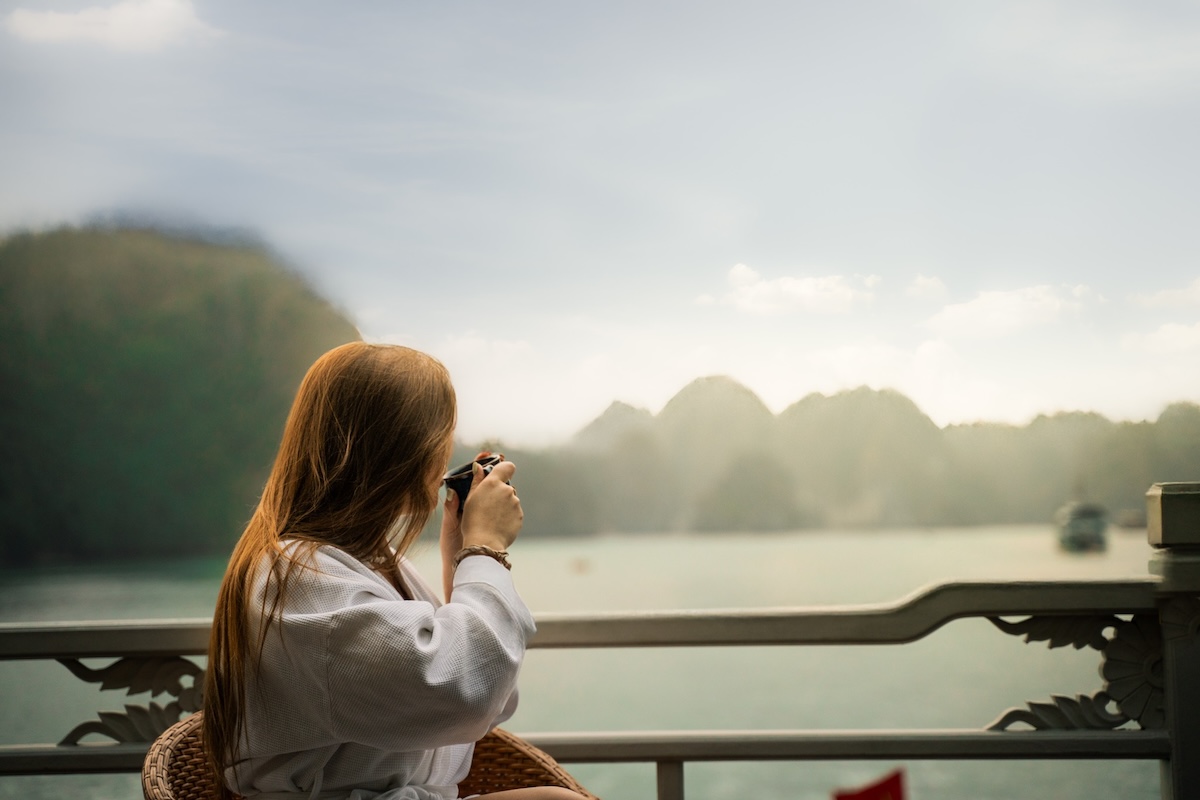
Slow mornings by the bay.
Photo: Bhaya Cruises
4. Choosing the Right Cruise – Popular Options
If you're planning a short stay in the north, the 2D1N cruise is the option most people find easy to fit into their schedule. Although the itinerary is compact, it still takes you to the key spots — Sung Sot Cave, Titop Island and a simple kayaking session — giving you a clear sense of what Halong Bay is like without taking too much time from the rest of your trip. It’s a practical choice when you want to experience the bay but don’t have many days to spare.
For those who prefer a slower pace, the 3D2N cruise offers a noticeably different experience. With the extra day, the schedule usually extends into quieter parts of the bay such as Bai Tu Long or Lan Ha, where there is more space and fewer boats. This also means you get more varied activities, like cycling or visiting floating communities, along with extra time on the water for kayaking or swimming. It’s the kind of itinerary that lets you switch off properly rather than rush through a checklist.
Some travelers look for more comfort, and that’s where luxury cruises come in. These boats focus on a calmer, more comfortable stay — larger cabins, private balconies, and services that are a bit more refined. Depending on the cruise, you might find facilities such as a small pool, a gym or a spa. They tend to suit people who want the cruise to feel more like a quiet retreat than just a sightseeing trip.
On the other hand, mid-range and budget cruises still offer a reliable and enjoyable experience without pushing the cost too high. The rooms are clean, the meals are consistent, and the activities follow a clear and easy-to-manage schedule. This type of cruise works well for groups of friends, families, or anyone who simply wants to enjoy the bay in a straightforward, comfortable way.
5. What to Expect Onboard
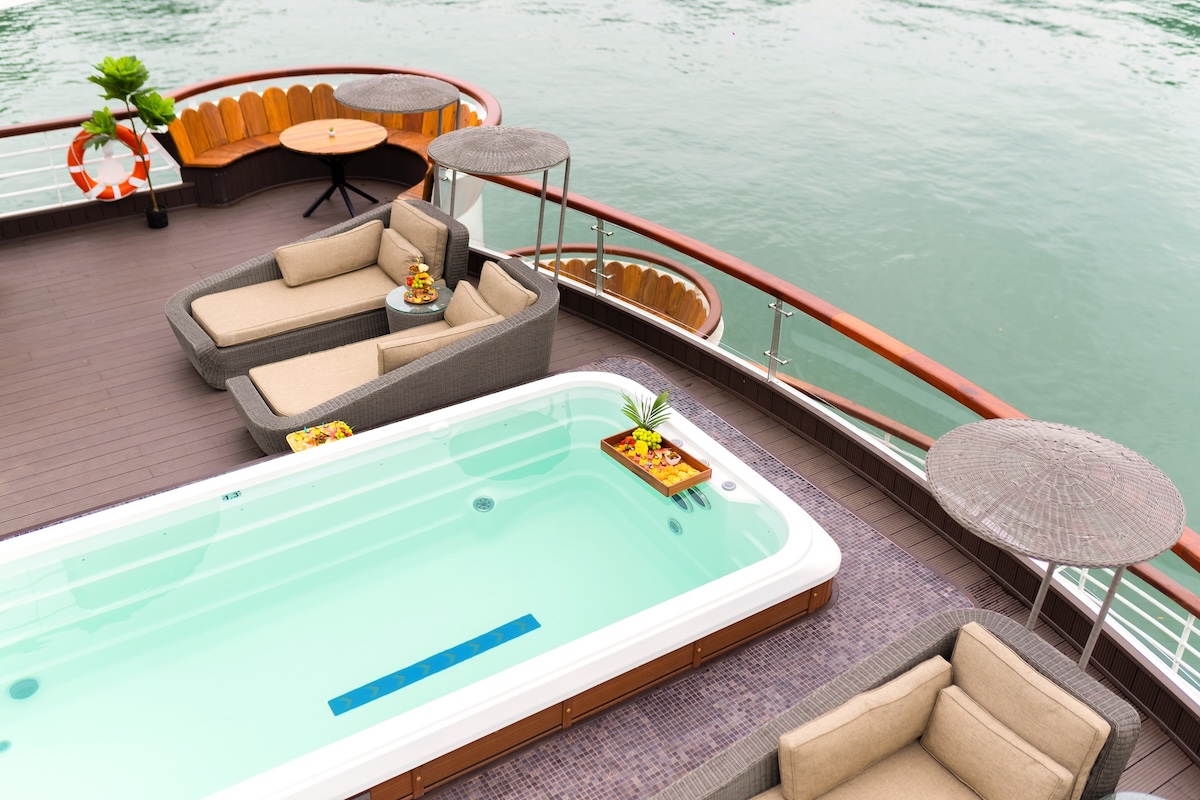
An outdoor pool or jacuzzi can be found in many 4- and 5-star cruises in Halong Bay.
Photo: Ambassador Cruise Halong
Spending a night on a Halong Bay cruise is a fairly relaxed experience, and one of the first things you’ll notice is how much slower everything feels. Cabins usually come with a private bathroom, air-conditioning, and large windows looking out over the bay. Some boats offer small balconies where you can sit and take in the view as the cruise moves along. The rooms aren’t as spacious as a hotel on land, but they’re clean and comfortable enough for a short getaway.
Meals on board are a mix of fresh seafood and simple Asian dishes, so it’s easy to find something familiar. Depending on the cruise, meals may be served as a set menu or a buffet. If you have dietary preferences, letting the staff know in advance usually works fine.
The activities are gentle and suitable for most people: kayaking, visiting caves, cooking demonstrations, morning tai chi, or trying night squid fishing. Nothing is too demanding, and you can choose to join in or simply stay on the deck and relax.
Most boats also have a few spaces for unwinding, like a small bar, a sun deck, or sometimes a spa room. But in reality, many passengers spend their free time just sitting outside, watching the bay and enjoying the quiet — it’s often the part people remember most from the whole trip.
6. Practical Tips
- It’s useful to carry some Vietnamese dong, especially for small expenses like drinks, snacks or tipping the crew. Most cruises accept card payments for bigger bills, but day-to-day spending is usually easier with cash. Changing a small amount at the airport or in Hanoi is often enough for a short trip.
- Power outlets in Vietnam commonly use Type A, C and D plugs, with Type C being the one you’ll see most often. Some cruises have universal sockets, but not all of them do, so bringing a simple travel adapter saves you from unexpected inconvenience.
- If you’re sensitive to motion, it might help to bring light medication. The bay is generally calm, but short stretches of movement between islands can still affect some travelers. Safety procedures on cruises are straightforward, and life jackets are always provided for activities like kayaking or bamboo boat rides.
- Weather in the north can shift quickly, especially from May to September, so having travel insurance is a good idea in case of delays or sudden itinerary changes. It doesn’t happen often, but cancellations due to storms are possible.
- Tipping isn’t required, but many travelers choose to leave a small amount for the crew at the end of their stay. It’s simply a way of saying thanks, especially since staff often work long hours on board to keep everything running smoothly.
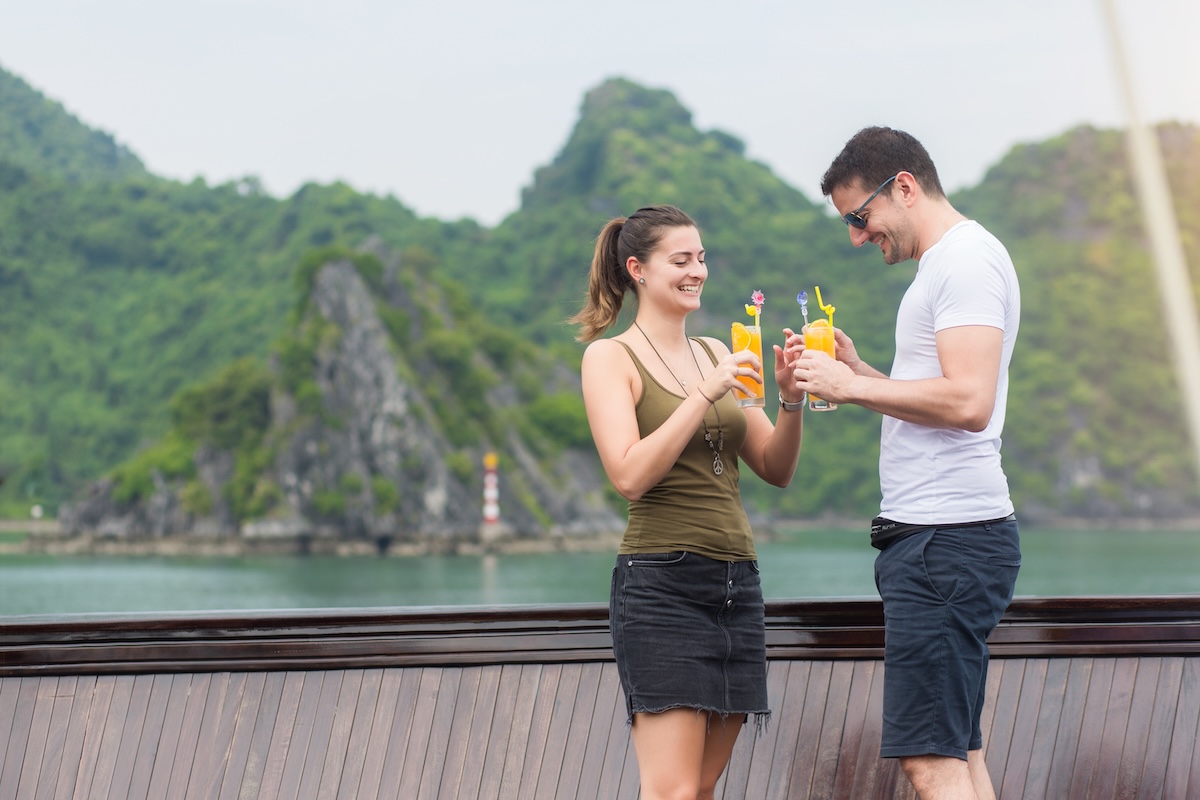
Bring some Vietnamese dong for small expenses like drinks, snacks or tip on the cruise.
Photo: Genesis Luxury Regal Cruise
7. Suggested Itinerary
If you’re flying in from Malaysia, most trips begin smoothly with an afternoon or evening arrival in Hanoi. Spending your first night in the city gives you time to rest, have a simple dinner, and ease into the slower pace of northern Vietnam before heading out to the bay.
The next morning, the drive to Halong Bay is straightforward, and you’ll usually reach the marina around late morning or midday. Once on the cruise, the atmosphere changes immediately—quiet water, open views, and a slower rhythm than what you’d find in the city. The first day on board often includes a short activity such as kayaking or visiting a cave, followed by a relaxed evening on deck.
Your second day on the cruise is usually calmer, with a morning activity and enough time to enjoy the scenery before returning to the mainland. Many travelers head back to Hanoi for one more night to explore the Old Quarter, try a few local dishes, or simply unwind before flying home. If you have an extra day, a short side trip around Hanoi—such as visiting a museum, enjoying a café, or taking a gentle walk around Hoan Kiem Lake—fits nicely without making the itinerary feel rushed.
Overall, this plan keeps the trip simple and manageable while still giving you a clear sense of what makes Halong Bay special, especially for a short break from Malaysia.
8. International Cruises from Malaysia to Halong Bay
Although there are no direct, dedicated Malaysia–Halong cruise routes, several long-haul itineraries that depart or pass through Singapore and Port Klang eventually make their way to Hong Kong before continuing north to Halong Bay. These itineraries are usually operated by larger international cruise lines and appear seasonally rather than on a fixed weekly schedule.
Ships such as Celebrity Solstice, Viking Orion, and Oceania Riviera run extended East Asia routes that link Singapore → Port Klang → Thailand → Hong Kong → Vietnam. On these journeys, Halong Bay is typically included as one of the northernmost stops, reached after the ship sails north through the region. Depending on the route, the sailing time from Malaysia to Halong — through Thailand and Hong Kong — is usually five to seven days at sea with multiple stops in between, as these are multi-country itineraries, not point-to-point sailings.
When these ships arrive in Halong, the stay is generally within the day (around 6–10 hours), giving passengers time for classic shore excursions such as cruising among the limestone islands or taking a short trip to Hanoi. A small number of longer voyages may include an overnight stop, but this is not common; most ships depart in the evening as they continue toward central Vietnam or return south.
For Malaysian travelers planning a wider Asia cruise, these seasonal itineraries offer an easy way to include Halong Bay without needing an extra flight — simply by choosing a route that naturally flows from Singapore or Port Klang all the way up to northern Vietnam.
9. Is a Halong Cruise Worth It?
If you’re already visiting northern Vietnam, setting aside a day or two for Halong Bay is genuinely worth it. Ha Long Bay offers a kind of landscape and atmosphere you don’t usually see in your travels around the region. Cambodia’s coastline is open and flat, while Halong Bay is all about narrow waterways, quiet coves, and limestone cliffs rising straight from the sea. The contrast alone makes the experience feel new, even if you’ve traveled a lot within Southeast Asia.
What makes the experience meaningful is its simplicity: you don’t need a long holiday, the journey from Hanoi is straightforward, and once you’re on the bay, the slower pace comes naturally. It’s the kind of short trip that leaves you with a clear change of atmosphere without demanding too much planning or effort.
Even with a brief itinerary, the experience feels complete — the kind of trip where you return home feeling lighter, with a small piece of northern Vietnam that stays with you.