Complete Halong Bay Guide for Travelers from Canada - Cruise Tips Included
Halong Bay is one of those places where the landscape reveals itself gradually. At first glance, it is a wide stretch of quiet water, but as you move farther out, the limestone islands begin to rise in different shapes and layers, creating a scene that feels both familiar and entirely its own. Locals often describe the bay as a place where the weather decides the mood: some days clear and bright, other days soft with mist, each offering a different way of seeing the same formations. It’s this shifting character that has made Halong a place travelers return to, not just for the scenery but for the calm that settles over the water once you leave the harbour behind.
For visitors from Canada, the journey to Halong usually begins in Hanoi, followed by a few hours on the expressway toward the coast. It’s a transition that feels deliberate: the sound of the city fades, the landscape opens up and the bay eventually appears almost without warning. Whether you’re drawn by its status as a UNESCO World Heritage Site or simply by the promise of slower moments on the water, Halong offers an experience shaped as much by its natural setting as by the pace it encourages. This guide brings together practical insight and local understanding to help you plan your visit, from choosing the right cruise to navigating the details that make the trip smoother.
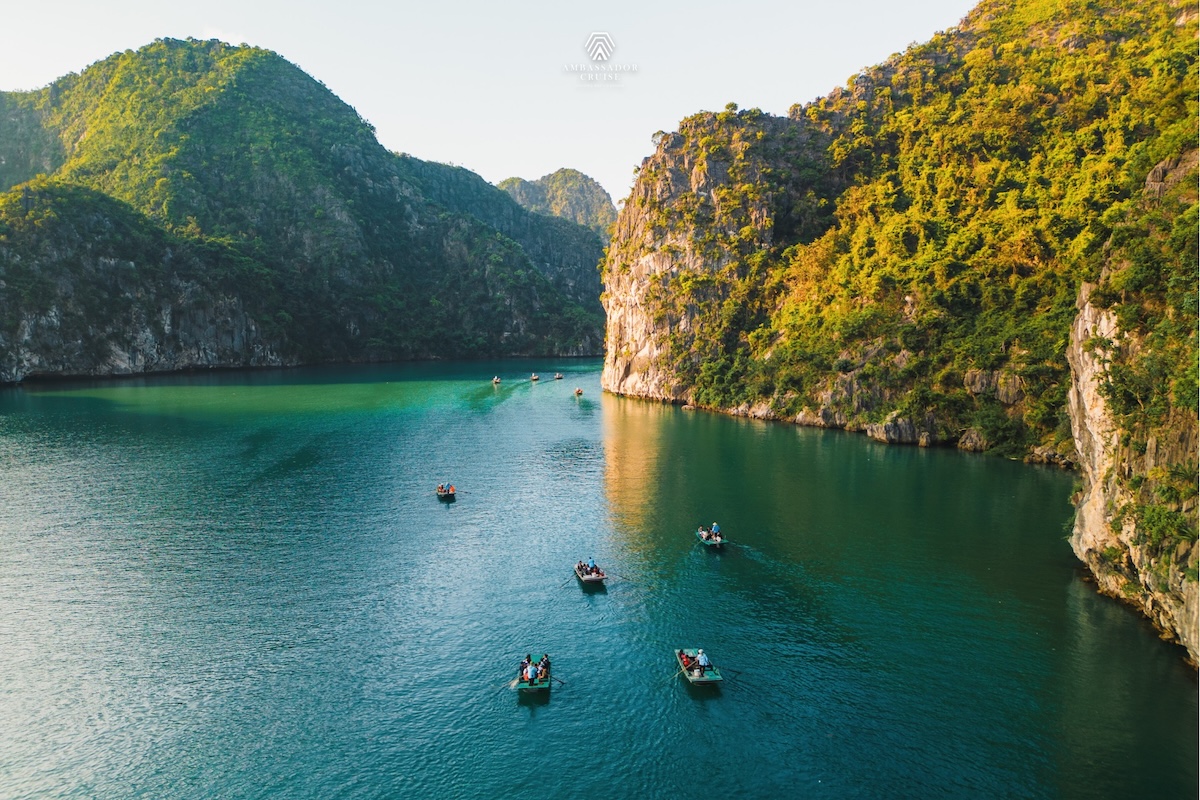
Halong Bay's emerald water and towering limestone islands. (Photo: Ambassador Cruise Halong)
1. Getting from Canada to Halong Bay
Travelers from Canada typically reach Halong Bay by flying into Hanoi, as there are no direct flights to the northern coast. Most routes from major Canadian cities connect through hubs such as Vancouver, Toronto, Seoul, Tokyo or Hong Kong before arriving in Hanoi. Depending on the connection and point of departure, the total travel time often ranges from 15 to 20 hours, so many visitors choose to spend their first night in Hanoi to adjust before continuing onward.
From Hanoi, the drive to Halong Bay takes around 2.5 to 3 hours via the expressway. Private cars, shared shuttles and limousine vans are the most common options, and all operate on a schedule that aligns well with early afternoon cruise departures.
The overall journey is straightforward once you arrive in Vietnam, and planning your transfer with some buffer time helps make the transition easier after a long-haul flight. By the time you reach the coast, the shift from city pace to open water feels gradual and grounding, setting the tone for the experience that follows on the bay.
2. Visa & Entry Requirements
Visa Application: If you hold a Canadian passport and are planning a trip to Vietnam, you should know that a visa is required prior to arrival. The most convenient and commonly used option is the Vietnamese E-visa, which allows stays of up to 90 days and can be applied for online from abroad. The process involves submitting required information and passport scan to the official Vietnamese immigration portal, paying the fee, and waiting for approval — all before you set out.
Entry to Vietnam: Once approved, the E-visa lets you enter Vietnam through any of its international airports, as well as designated land borders and seaports. This flexibility works well for travelers heading to Halong Bay, as it supports both air arrival and subsequent transfers to coastal regions. Because immigration regulations may evolve, especially in response to global travel changes, it is advised to apply at least a few weeks ahead of your planned departure to avoid delays or unexpected complications.
Passport Validity Requirements: Your passport must meet standard international entry requirements: it needs to be valid for at least 6 months beyond your planned date of entry. Having a passport close to expiry, or one with insufficient blank pages for entry stamps, may cause issues at the border.
Health & Travel Advisory Updates: Although health screening and vaccination requirements for short tourist visits to Vietnam tend to be minimal for most travelers, you should verify any current travel advisories or public health recommendations before departure especially as global conditions evolve. This includes checking for routine advisories from global health authorities or Canadian travel advice updates relevant to Vietnam.
Travel Insurance Recommendations: For added peace of mind, consider purchasing a comprehensive travel insurance that includes medical coverage, emergency evacuation, and protection against trip cancellation or unexpected delays. This kind of insurance is particularly useful for remote or coastal destinations like Halong Bay where medical facilities may be limited.
*** Note: For maximum safety, always use the official immigration website, or verify any third-party agent thoroughly before payment.
By preparing your documents carefully, ensuring passport validity, and applying for the e-visa with sufficient time, Canadian travelers can expect a smooth entry process into Vietnam. From there, onward travel to destinations like Halong Bay becomes a simple and straightforward extension of the journey.
3. Best Time to Visit Halong Bay
Halong Bay can be visited at any time of year, but the experience shifts noticeably with the seasons. The period from October to April is widely considered the most comfortable for cruising, with cooler temperatures, calmer conditions and a softer light that brings out the layers of limestone across the bay. Winter months can be slightly cool and misty, yet many travelers find that this atmosphere adds a calm, almost ethereal quality to the landscape.
From May to September, the weather becomes warmer and brighter, which is ideal for swimming and kayaking. This period, however, also brings higher humidity and the possibility of tropical storms, especially from July to August. Cruises still operate throughout the summer, but itineraries may adjust if conditions require it. Travelers coming from Canada, where seasonal contrasts are significant, often appreciate knowing that summer in northern Vietnam can feel markedly humid compared to what they are used to.
For those who prefer fewer crowds and balanced weather, the shoulder months—March, April, October and early November—offer excellent visibility, quieter bays and stable conditions without the extremes of heat or cold. These months tend to suit travelers who want a relaxed pace and more room to enjoy the scenery.
In the end, the best time to visit depends on the kind of experience you want: clearer skies and cooler air in the winter months, or warm sunshine and water activities in the summer. Halong Bay remains striking in all seasons, but choosing the timing that aligns best with your expectations will make the journey feel more rewarding.
4. Choosing the Right Cruise
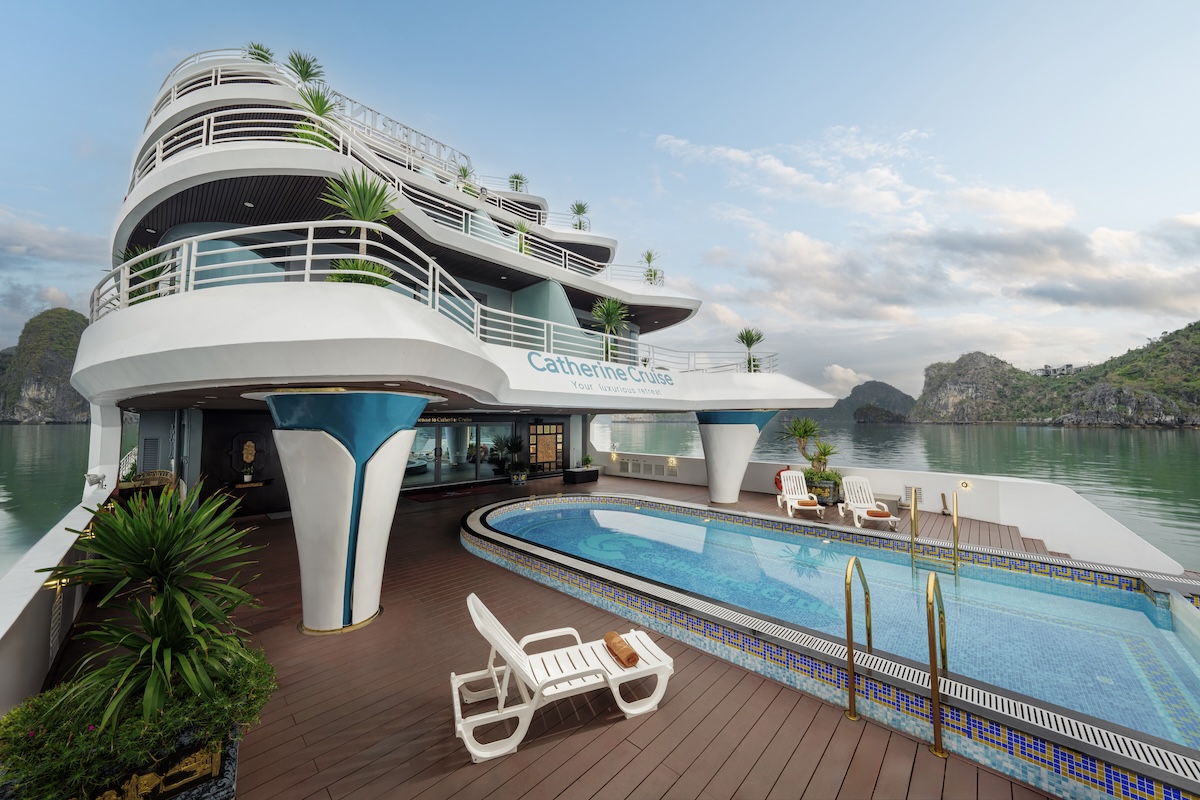
Luxury cruises offer excellent comfort and professional service throughout the tour. (Photo: Catherine Cruise)
Choosing a cruise in Halong Bay largely depends on how much time you want on the water and the style of experience you prefer. Most 2D1N cruises stay within the central bay, covering classic stops like caves and kayaking areas. This option works well if you want a clear introduction without committing too many days. Cruises such as Signature, Athena or Alisa often follow these established routes.
Travelers looking for a quieter atmosphere tend to choose the 3D2N itinerary, which allows the boat to move farther into less crowded areas, including parts of Bai Tu Long or Lan Ha Bay depending on the operator. With more time, captains also have flexibility to adjust routes around weather and traffic on the bay. Longer itineraries are commonly offered by boats like Orchid, Stellar of the Seas or Peony, known for covering wider sections of the bay.
Luxury vessels provide spacious cabins and more stable routes, while mid-range boats balance comfort with local-style activities. Budget options keep things simple but still follow similar scenic paths.
Focusing on the essentials, how much time you have, how quiet you want the route to be and what level of comfort you expect, is the easiest way to choose a cruise that fits your trip.
5. What to Expect Onboard
Most Halong Bay cruises offer comfortable, hotel-style cabins with en-suite bathrooms, air conditioning and large windows or balconies so travelers can take in the scenery as the boat moves through the bay. On higher-end vessels like Capella, Catherine, Stellar of the Seas or Paradise Elegance, cabins tend to be more spacious, while mid-range boats such as Athena or Peony provide a simpler but still comfortable setup.

Cooking classs is one of the fun activities you shouldn't miss. (Photo: Peony Cruises)
Meals onboard usually combine Vietnamese seafood with familiar international dishes, served in a relaxed, sit-down setting. Activities follow a gentle pace: kayaking in sheltered areas, visiting a limestone cave, joining a bamboo boat ride or taking part in small onboard demonstrations like cooking or tai chi. In the evenings, most cruises keep things calm, with options such as squid fishing or unwinding on the sundeck.
Facilities vary by cruise level. Luxury boats may offer spas and larger lounges, while mid-range and budget vessels focus on essential comforts. Regardless of category, the overall onboard experience is designed to be steady, scenic and easy to follow, giving travelers enough structure to enjoy the bay while still leaving room to relax and take in the landscape.
6. Practical Tips
- Paying in Vietnamese dong is the easiest option across most services, though some cruises and travel agencies may accept major foreign currencies for pre-arranged payments. It’s a good idea to carry a small amount of cash for drinks, tips or incidental expenses on board.
- Vietnam uses Type A, C and D plug sockets with a 220V supply. A universal adapter works well for most devices, and modern electronics typically handle the voltage without issue.
- Travelers arriving from Canada often need time to adjust after a long flight and time-zone change, so planning a relaxed schedule on your first day in Hanoi is helpful. If you are sensitive to motion, consider bringing motion-sickness tablets, especially during the summer months when the water can be livelier.
- Comprehensive travel insurance is strongly recommended, covering medical care, cancellations and any cruise-related adjustments. Tipping is not mandatory in Vietnam, but a small gratuity for cruise crew members is appreciated; many guests offer the equivalent of USD 5–10 per day, depending on the service.
7. Suggested Itinerary

Cycling at Viet Hai Village in the 3 day/2 night itinerary on Capella Cruise (Photo: Capella Cruise)
Most travelers from Canada spend at least one night in Hanoi before continuing to Halong Bay, both to adjust after a long flight and to make the next day’s transfer easier. With a full or half day in the city, you can explore the Old Quarter, walk around Hoan Kiem Lake or visit the Temple of Literature for a simple introduction to local culture without committing to a long tour.
On the morning of your cruise, transfers from Hanoi to Halong typically depart between 9 and 10 am, reaching the port in time for early afternoon boarding. The first day on the bay usually includes lunch on board, gentle cruising through the limestone formations and a light activity such as kayaking or visiting a cave. Evenings are calm, giving you time to unwind on deck or join a small onboard demonstration.
Travelers opting for a second night on the bay often spend the next day in quieter areas where fewer boats operate. These routes offer more space for kayaking, swimming or visiting small coves and fishing communities. Cruises usually return to the harbour late the following morning, leaving enough time to travel back to Hanoi or head directly to the airport, depending on your schedule.
8. International Cruises from Canada to Halong Bay – What Travelers Should Know
Cruises don’t sail directly from Canada to Halong Bay, so anyone hoping to reach the bay by sea will usually come across it as one stop on a much larger trip through Asia. These long itineraries tend to start in places like Singapore, Hong Kong, Keelung or Tokyo, and depending on the season, some cruise lines choose to add Vietnam to their route. A few well-known companies such as Royal Caribbean, Celebrity Cruises, Princess Cruises and Holland America have included Vietnamese ports in past years, but the details change often. Because of that, it’s always better to look at the latest schedule rather than rely on something you may have seen before.
When a ship does stop in Halong, it usually stays for just one day. That’s enough time for a quick boat tour on the bay, a visit to a cave or a short cultural excursion before everyone returns to the ship. Some of the longer world cruises might stay overnight, but that’s the exception, not the norm.
For travelers from Canada, it’s worth keeping in mind that a port call gives you only a brief taste of Halong. If you’re hoping for something slower — kayaking, swimming, or an overnight cruise on a smaller boat — flying into Vietnam and joining a dedicated Halong or Lan Ha Bay cruise is the more reliable way to get that experience. The stop made by international ships is pleasant, but it doesn’t offer the same depth as spending a full day and night out on the water.
9. Is a Halong Cruise Worth It?
For most visitors, the answer comes down to what you want out of your time in northern Vietnam. Seeing Halong Bay from the water gives you a clearer sense of its scale and its quieter corners — something you don’t quite get from a day trip on land. Even a short cruise can feel worthwhile if your schedule is tight. You still get the classic views, time to kayak or visit a cave and a chance to experience the bay as it changes from afternoon to early morning. For travelers hoping to unwind after long flights and busy city days, the rhythm on the bay tends to be a welcome change.
In the end, a Halong cruise isn’t about dramatic moments; it’s about steady, quiet impressions that stay with you. If that aligns with the kind of travel you enjoy, it’s usually well worth the time.